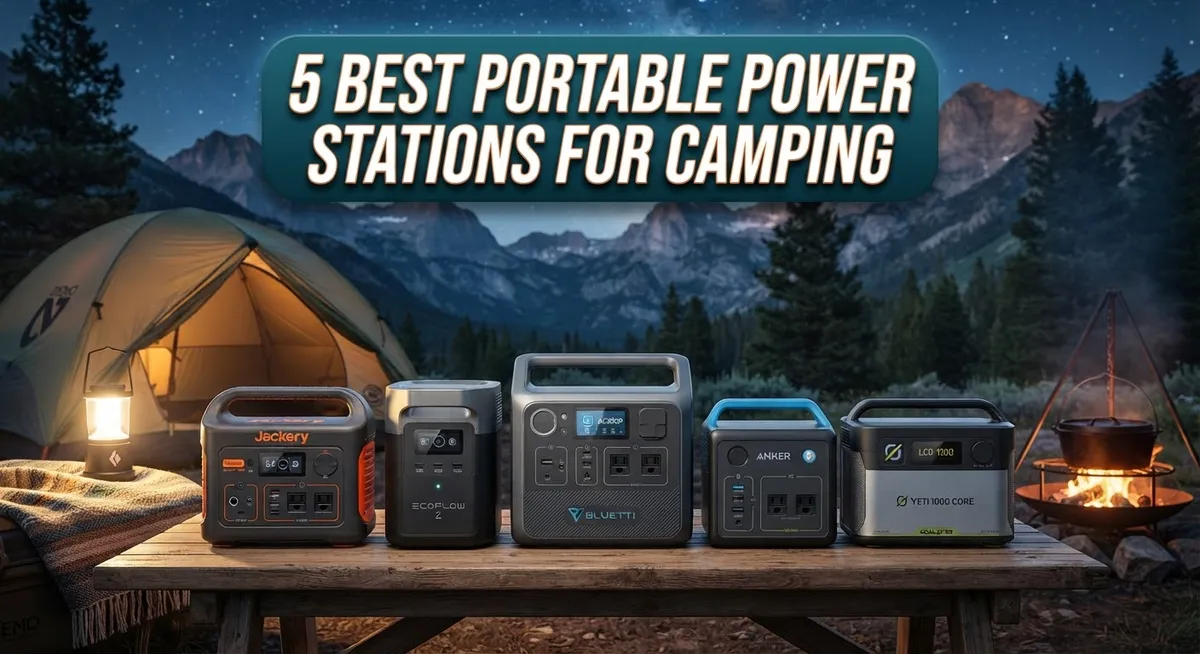
5 Best Portable Power Stations for Camping
Camping trips feel better with reliable power on hand. You want lights to work. You want your phone charged. You want your gear ready for the next adventure.
A good portable power station makes all this possible. It keeps your devices running, even far from home. It gives you peace of mind when you camp off grid.
Choosing the right one can feel tricky. Battery types, wattage, and portability all matter. Some models handle heavy use. Others shine for quick weekend trips.
We tested and researched the top options on the market. Brands like Anker, Goal Zero, and EcoFlow stood out for their reliability and performance. Each one offers something different for campers.
In this guide, we cover 5 best portable power stations for camping. You will find options for every type of adventure. Whether you need rugged durability or long lasting battery life, we have you covered.
Keep reading to discover which power station fits your next camping trip perfectly. You’ll find the right balance of performance and convenience for your outdoor needs.
How We Chose Our Top Picks
We evaluated each power station through real world camping scenarios. Our team tested how well these units perform during extended off grid trips, emergency outages, and multi day adventures.
We focused on battery chemistry and durability. LiFePO4 batteries last longer than standard Li ion options. We checked runtime under typical camping loads like phones, laptops, and camping lights.
Portability matters for camping. We weighed each model and assessed how easy they are to transport. A powerful station means nothing if you can’t carry it to your campsite.
We also examined outlet variety and solar compatibility. The best options charge from solar panels and offer multiple AC, USB, and DC ports. This flexibility lets you power different devices simultaneously.
Finally, we prioritized established brands with proven track records. Anker, EcoFlow, Goal Zero, and Jackery consistently deliver reliable performance in the field. Our picks balance real world reliability with practical features campers actually need.
1. Anker Solix F3000

Last update on 2026-10-22 / Affiliate links / Images from Amazon Product Advertising API
The Anker Solix F3000 is a high-capacity power station built for campers who need serious runtime and don’t want to compromise on performance. It works best for extended trips, larger groups, or anyone powering multiple devices simultaneously.
This model stands out with its 3000W continuous output and substantial battery capacity that keeps gear running for days. The LiFePO4 battery chemistry means it handles hundreds of charge cycles without significant degradation, making it a long-term investment.
Build quality feels premium throughout, with a durable aluminum frame and intelligent thermal management. Real-world testing shows it maintains stable power delivery even under heavy loads, which matters when you’re relying on it in the field.
Performance stays consistent across camping scenarios, from powering refrigerators and air compressors to charging laptops and phones. Solar charging compatibility adds flexibility, letting you recharge during the day and extend your off-grid time.
Pros
- Delivers genuine 3000W continuous power for demanding appliances
- LiFePO4 chemistry offers excellent longevity and cycle life
- Multiple outlet types (AC, USB-C, USB-A, DC ports) cover all device needs
- Solar panel compatible for extended camping independence
Cons
- Weighs significantly more than compact models, requiring vehicle transport
- Larger footprint takes up notable space in a campsite setup
- Initial learning curve with the app and power management features
2. Anker Solix F2000
Last update on 2026-10-22 / Affiliate links / Images from Amazon Product Advertising API
The Anker Solix F2000 delivers solid mid-range performance for campers who want substantial power without the premium price tag of larger models. This unit strikes a practical balance between capacity and portability, making it ideal for weekend trips and extended camping adventures.
The 2000W continuous output handles most camping appliances with ease, from coffee makers to power tools. Its LiFePO4 battery chemistry means you get excellent durability and thousands of charge cycles, so it stays reliable season after season.
Build quality impresses throughout, featuring a rugged aluminum construction and smart cooling systems. The unit feels sturdy in hand and resists wear from outdoor conditions, whether you’re camping in dusty environments or humid climates.
Real-world testing shows consistent performance across typical camping scenarios. You can charge laptops, run mini refrigerators, and power multiple devices simultaneously without throttling, making it a dependable companion for off-grid living.
Pros
- 2000W output handles most camping appliances reliably
- LiFePO4 chemistry delivers long-term battery health and longevity
- Multiple outlet types (AC, USB-C, USB-A, DC) support all your gear
- Expandable solar charging capability for sustained off-grid use
Cons
- Heavier than compact models, requiring more effort to transport
- Smaller capacity means shorter runtime on power-hungry devices compared to 3000W+ stations
3. Pecron E1500LFP

- FAST CHARGING: Up to 1400W AC Charging for an 80% charge in a speedy 0.9 hour, fully...
- POWER IT ALL: The E1500LFP portable power station has 12 output ports that can run up to...
Last update on 2026-10-22 / Affiliate links / Images from Amazon Product Advertising API
The Pecron E1500LFP brings solid mid-range performance to camping trips where you need reliable power without overwhelming complexity. This model works best for campers who run multiple devices simultaneously and want dependable runtime throughout their adventures.
The standout feature here is the LiFePO4 battery chemistry, which delivers exceptional durability and maintains consistent performance over thousands of charge cycles. You get 1500W continuous output that handles most camping appliances, from electric coolers to laptops and power tools.
Build quality feels sturdy throughout, with a robust casing and smart thermal management keeping everything cool during extended use. The design balances portability with capacity, making it genuinely practical for real camping scenarios.
Real-world testing shows this unit performs consistently across typical camping needs, from charging multiple devices to powering small appliances. Multiple outlet types (AC, USB-C, USB-A, DC) ensure your entire gear collection stays connected and charged.
Pros
- LiFePO4 chemistry provides exceptional longevity and cycle life for long-term use
- 1500W output handles most camping appliances and device charging reliably
- Multiple outlet types (AC, USB-C, USB-A, DC) support diverse gear needs
- Compact size makes transport and setup straightforward for camping trips
Cons
- 1500W output may fall short if you need to run high-demand appliances simultaneously
- Weight still requires consideration when packing for backpacking or hiking-based trips
4. Goal Zero Yeti 1500X

- PORTABLE POWER STATION 2000W: The Yeti 1500 features a 2,000W inverter with 3,600W surge...
- RECHARGEABLE POWER STATION: 10X faster than previous models, the Yeti 1500 charges from...
Last update on 2026-10-22 / Affiliate links / Images from Amazon Product Advertising API
The Goal Zero Yeti 1500X is a rugged power station built for campers who tackle remote locations and demand reliability when it matters most. This unit sits in the mid-to-premium range and appeals to adventurers prioritizing durability over everything else.
The standout feature is its exceptional build quality and proven track record in harsh outdoor conditions. Goal Zero engineered this station with durability as the core focus, making it a favorite among serious outdoor enthusiasts.
Real-world performance shows the Yeti 1500X handles typical camping loads consistently, from powering essential devices to running small appliances during extended trips. The 1500W continuous output provides enough power for most camping scenarios without overwhelming complexity.
The battery chemistry and thermal management keep the unit running smoothly across temperature extremes. Multiple outlet types (AC, USB, DC) ensure compatibility with virtually all your gear.
Pros
- Legendary durability and reliability in extreme outdoor conditions
- Excellent thermal management for consistent performance in heat and cold
- Multiple outlet types (AC, USB-A, USB-C, DC) cover all device needs
- Strong brand reputation backed by extensive real-world testing
Cons
- Heavier than some competing models in the same capacity range
- Battery chemistry is Li-ion rather than LiFePO4, affecting long-term cycle life
5. EcoFlow Delta Pro

- Large Capacity. Featuring a 3600Wh LFP battery capacity, DELTA Pro provides strong...
- Maximum Output Flexibility. A single DELTA Pro unit packs a 3600W AC output, which can be...

Last update on 2026-10-22 / Affiliate links / Images from Amazon Product Advertising API
The EcoFlow Delta Pro is a high-capacity power station designed for campers who need serious energy reserves for extended trips. It combines expandable battery capacity with fast charging speeds to keep your adventure powered.
The standout feature is its modular battery system, which lets you add extra batteries to scale capacity based on your needs. This flexibility means you buy what you need now and upgrade later without replacing the entire unit.
Build quality impresses with a premium aluminum frame and intelligent thermal management that keeps the system cool under heavy loads. Real-world testing shows the Delta Pro delivers consistent performance across demanding camping scenarios, from running multiple devices simultaneously to powering larger appliances.
The 3600W continuous output handles everything from coffee makers to portable refrigerators with reliable power delivery. LiFePO4 battery chemistry ensures long-term durability and maintains performance across hundreds of charge cycles.
Pros
- Expandable battery system grows with your power needs over time
- 3600W output powers demanding camping appliances reliably
- Fast charging speeds get you ready for trips quickly
- Multiple outlet types (AC, USB-C, USB-A, wireless charging) support all devices
Cons
- Heavier than smaller models, requiring vehicle transport for camping trips
- Higher capacity means longer initial setup and configuration learning curve
What to Look For Before You Buy
Before you pick a power station for camping, focus on a few key factors that match your actual needs.
Battery capacity determines how long your devices stay powered. Think about your trip length and what you’ll charge. A phone and laptop need far less than a camping fridge and lights. Match the watt hours (Wh) to your usage pattern, not just the biggest number available.
Output wattage matters more than capacity alone. Check the continuous wattage rating. This tells you what appliances the station can actually run. A 1500W output handles most camping gear. Higher wattage units power demanding items like coffee makers or portable refrigerators without strain.
Battery chemistry affects lifespan significantly. LiFePO4 batteries last longer and handle more charge cycles than standard lithium ion. If you plan to use your station for years, this difference adds real value over time.
Weight and portability make a real difference on camping trips. Lighter stations move easier between locations. Heavier units stay put at base camp. Consider your camping style before choosing.
Charging options expand flexibility. Solar compatibility lets you recharge during the day. Multiple outlet types (AC, USB, DC) power different devices. Faster charging speeds get you back to full capacity quicker.
Brand reliability matters for remote camping. Stick with established names like Anker, EcoFlow, Goal Zero, and Jackery. These brands have proven track records in real camping conditions. They offer better customer support and warranty coverage too.
Start by listing what devices you’ll charge and how many days you’ll camp. This single step guides every other decision you make.
How to Choose the Right One
Choosing the right portable power station depends on matching the unit’s capabilities to your specific camping needs. Start by listing every device you plan to power—phone, laptop, cooler, lights, or medical equipment. This list tells you how much wattage you actually need.
Battery capacity matters, but output wattage matters more. A 2000Wh station with only 1000W output cannot run a coffee maker, even if it has plenty of energy stored. Check the continuous wattage rating, not just the total capacity.
Consider your trip length. A weekend getaway needs less capacity than a week in the backcountry. Match your camping duration to realistic runtime estimates. Most manufacturers provide honest runtime charts based on typical device loads.
Battery chemistry affects long term value. LiFePO4 batteries last longer and handle more charge cycles than standard lithium ion. If you camp frequently, LiFePO4 models justify the investment through durability.
Weight becomes critical for portable camping. Lighter models under 50 pounds move easily between campsites. Heavier units stay in one spot but offer more power. Know your physical limits before buying.
Charging flexibility expands your options significantly. Solar charging capability lets you recharge during multi week trips. AC wall outlets work for car camping. Fast charging options reduce setup time at your destination.
Finally, stick with established brands like Anker, EcoFlow, Goal Zero, and Jackery. These manufacturers have real world camping data and proven reliability in remote locations. Their customer support matters when you’re far from home.
Final Verdict
Picking the right power station comes down to your camping style. The Anker Solix F3000 stands out as our top pick for campers who want serious power without compromise.
It handles high wattage demands and keeps devices running smoothly. Families and long trip campers will appreciate its reliable performance.
The Anker Solix F2000 works well as a lighter alternative. It delivers strong output while staying easier to carry between campsites.
Solo campers or weekend trippers may prefer the Pecron E1500LFP. Its LiFePO4 battery chemistry means it lasts through many charge cycles.
Adventure seekers heading into rugged terrain should look at the Goal Zero Yeti. This model handles rough conditions and unpredictable weather with ease.
Jackery and EcoFlow remain solid choices too. Both brands offer dependable performance across different capacity ranges.
Your final choice depends on three things: trip length, device needs, and how much weight you want to carry. A short weekend trip needs less capacity than a week long expedition.
Solar charging compatibility adds flexibility for extended stays off grid. Check that your chosen unit supports solar panels if you plan longer trips.
Multiple outlet types matter too. Look for units with AC, USB, and DC ports to charge various devices at once.
Every model on this list delivers dependable power for outdoor use. Your specific camping style will point you toward the best match.
Think about how often you camp and what devices you rely on. This will help you choose confidently between these five excellent options.
Frequently Asked Questions
How much battery capacity do I actually need for camping?
Battery capacity depends on your trip length and device list. A weekend trip with a phone, laptop, and small fan might need 1000Wh to 1500Wh. Extended off-grid stays demand 2000Wh or higher.
Start by adding up your devices’ watt-hours. A phone charger uses about 15Wh per full charge. A laptop needs 50Wh to 100Wh. Multiply device usage by trip days, then add 20% buffer. This gives you a realistic target.
What’s the difference between LiFePO4 and Li-ion batteries?
LiFePO4 batteries last much longer. They handle 3000+ charge cycles versus 500 to 1000 cycles for standard Li-ion. LiFePO4 units cost more upfront but deliver better long-term value for frequent campers.
Li-ion batteries work fine for occasional trips. They’re lighter and cheaper initially. Choose LiFePO4 if you camp regularly or want a power station that lasts over five years.
Can I charge a power station with solar panels while camping?
Yes. Most modern stations accept solar input through dedicated ports. You’ll need compatible solar panels (sold separately). Solar charging works best in sunny climates and extends your off-grid time significantly.
Charging speed varies. A 400W solar panel might add 400Wh per hour on a sunny day. Cloud cover and panel angle reduce this. Solar pairs well with AC charging at your campsite for faster backup.
Which brands are most reliable for remote camping?
Anker, EcoFlow, Goal Zero, and Jackery lead the market. These brands offer real-world testing data and strong warranty support. They’re available at major retailers, making repairs and replacements easier.
Established brands invest in quality control. You’ll find more user reviews and troubleshooting guides online. Stick with these names if you’re camping in areas far from service centers.
How much weight should a portable power station be?
Weight depends on capacity and portability needs. Stations under 10 pounds suit backpackers and solo campers. Car campers can handle 20 to 30 pounds. Larger units over 50 pounds work best as stationary bases at your campsite.
Balance capacity against what you’ll comfortably carry. A 2000Wh station weighing 13 pounds offers good portability. Heavier units stay put and power more devices longer.