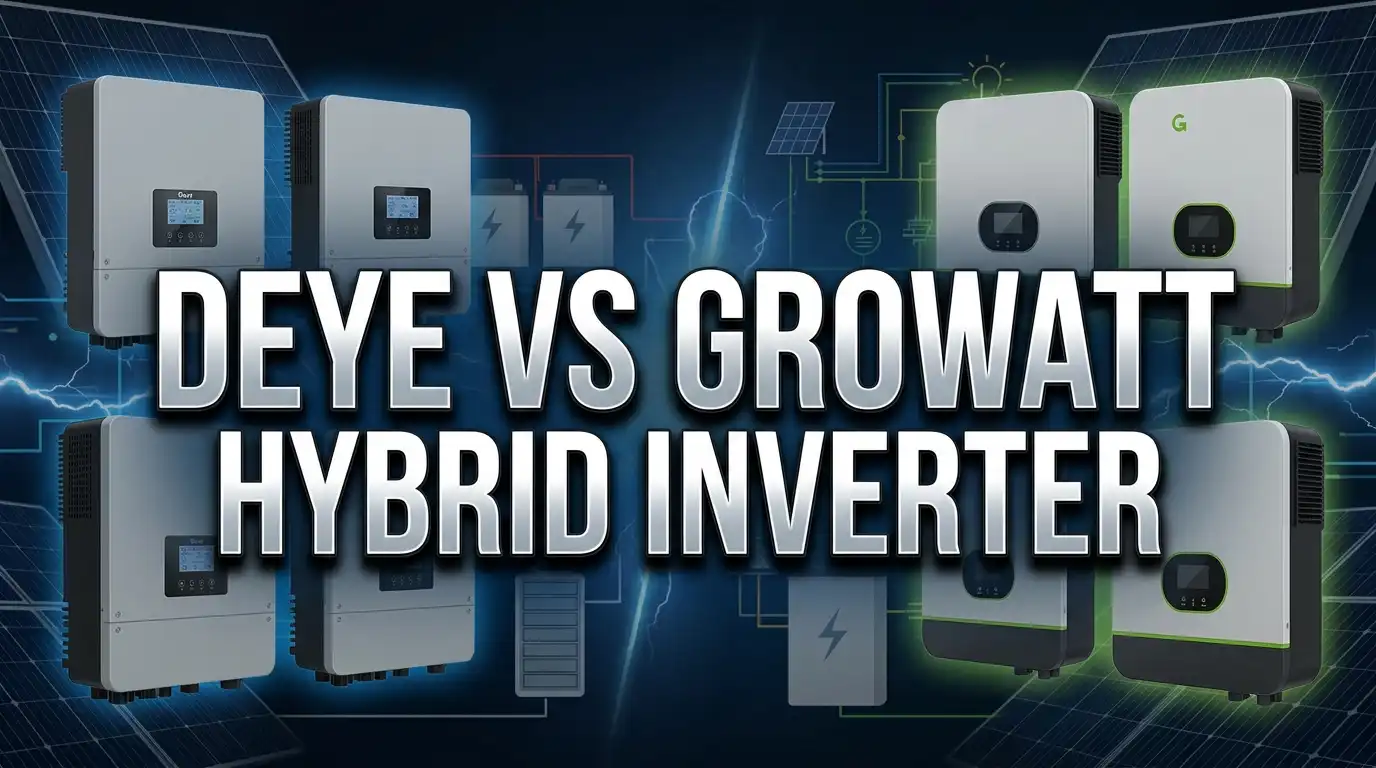
Deye vs Growatt Hybrid Inverter: Efficiency, Features & Performance Compared
Choosing a hybrid inverter can feel like a big decision. Two brands often top the list: Deye and Growatt.
Both inverters offer solid performance for solar setups. But they serve different needs and different types of homeowners.
Deye stands out for its build quality and advanced energy management. It suits larger systems that demand top efficiency and durability.
Growatt focuses on scalability and smart design. It works well for residential setups that need flexibility and future proofing.
In this guide, we compare both inverters side by side. You will learn their key specs, strengths, and best use cases.
By the end, you will know exactly which inverter fits your solar project. Let’s break down the Deye vs Growatt matchup in detail.
Quick Comparison: Deye vs Growatt Hybrid Inverter
| Feature | Deye | Growatt Hybrid Inverter |
|---|---|---|
| Conversion Efficiency | 98.6% | 98.6% max |
| Phase Configuration | Single/three-phase, low/high voltage | Single/three-phase, 3-10kW |
| Charge/Discharge Current | 100A (50kW model) | 200A |
| Battery Stackability | Up to 10 units | Scalable/expandable design |
| Build Quality | Metal casing, superior thermal mgmt | IP66 rated, solid construction |
| Protection Features | Advanced energy management | AFCI protection, 10ms UPS transition |
| Reliability | High build quality, durable | 97-98% reliability |
| Best Use Case | Premium, large installations | Cost-conscious, residential systems |
Deye Review

- 【Powerful Moisture Removal for Home – Stay Dry & Comfortable】: Removes up to...
- 【Whisper-Quiet Operation – Better Sleep, Day & Night】: Runs as quietly as 33dB with...
Last update on 2026-10-23 / Affiliate links / Images from Amazon Product Advertising API
Deye Hybrid Inverter
Deye hybrid inverters are premium solar power systems designed for installers and homeowners who prioritize efficiency and durability. They work with both single-phase and three-phase setups, making them flexible for residential and commercial installations.
The 50kW three-phase model stands out with 800V maximum voltage and 100A charge/discharge capacity, plus the ability to stack up to 10 battery units. This means your system can grow as your energy needs expand.
What really sets Deye apart is the 98.6% conversion efficiency paired with superior thermal management and metal casing construction. These features keep the inverter running cool and reliable for years, even in demanding conditions.
Real-world performance shows Deye delivers advanced energy management capabilities, especially in larger installations where every bit of efficiency matters. The build quality speaks for itself—this is equipment built to last.
Pros
- 98.6% conversion efficiency maximizes solar energy capture and storage
- Metal casing with superior heat dissipation ensures long-term durability
- Stackable battery support (up to 10 units) enables system expansion
- Advanced energy management features optimize performance in complex setups
Cons
- Limited market presence compared to more established competitors
- Significantly higher investment than alternative options
Growatt Hybrid Inverter Review

- 【10-Year US Warranty & Certified Protection】 Backed by a 10-year product warranty and...
- 【Scalable Split- & Three-Phase Power, Grid-Tied & Off-Grid】This all-in-one inverter...

Last update on 2026-10-23 / Affiliate links / Images from Amazon Product Advertising API
Growatt Hybrid Inverter
Growatt hybrid inverters deliver reliable solar power management for homeowners and installers seeking scalable solutions. These systems excel in residential installations where flexibility and expandability matter most.
The SPH models feature 200A charge/discharge capacity with DC/AC ratios up to 1.5, matching premium efficiency at 98.6%. You get IP66 protection and AFCI safety features built into every unit.
Real-world data shows 97-98% reliability rates with failure rates between 2-5%, proving solid performance in diverse climates. The 10ms UPS transition keeps your home powered during grid interruptions with minimal interruption.
Growatt systems shine through scalable design that lets you expand capacity as your energy needs grow. This future-proof approach means you invest wisely today without replacing equipment tomorrow.
Pros
- Matches Deye’s 98.6% conversion efficiency for maximum energy capture
- 10ms UPS transition protects against power loss during switching
- Expandable architecture supports multiple battery units for growing installations
- IP66 rating and AFCI protection ensure safety in various environments
Cons
- Energy management features lack the advanced capabilities of premium competitors
- Less robust thermal management compared to metal-cased alternatives
Head to Head: Key Differences
Deye and Growatt both deliver 98.6% conversion efficiency, so energy capture performance sits at parity. The real differences emerge in construction quality and system architecture.
Build quality separates these two clearly. Deye uses metal casing with superior thermal management, meaning components stay cooler under stress.
Growatt relies on standard plastic housing with IP66 rating protection, which handles moisture well but generates more heat during peak operation.
Energy management features favor Deye in larger installations. Deye’s advanced algorithms optimize battery charging and grid interaction across complex multi-unit setups.
Growatt keeps energy management simpler, focusing on straightforward charge/discharge cycles that work perfectly fine for most residential systems.
Scalability and expansion highlight Growatt’s strength. The SPH models stack seamlessly as your energy needs grow, with 200A charge/discharge capacity and DC/AC ratios reaching 1.5.
Deye also stacks up to 10 battery units, but the system feels less flexible during mid-project upgrades.
Reliability data shows both perform well. Growatt maintains 97-98% uptime with 2-5% failure rates across diverse climates.
Deye reports similar efficiency metrics but with fewer real-world failure reports, likely due to smaller installed base.
UPS transition speed matters for backup power. Growatt switches in 10ms during outages, protecting sensitive equipment.
Deye handles transitions similarly but publishes less transparent data on this metric.
Best fit scenarios differ. Choose Deye for premium systems where durability and advanced features justify the investment.
Select Growatt for residential setups prioritizing expandability and straightforward installation without premium feature complexity.
Which One Should You Buy
Deye comes out on top in this comparison. It offers better build quality, stronger thermal management, and more advanced energy features than Growatt.
These strengths make Deye the better choice for demanding setups. It handles heavy loads with ease and keeps performing well over time.
Growatt still holds its own though. It remains a solid pick for buyers who want dependable performance without extra complexity.
Best for each buyer
-
Deye: Ideal for premium installations and larger systems where efficiency, durability, and advanced energy management matter most.
-
Growatt: A great fit for residential and scalable setups where reliable performance and future expansion are the main goals.
Frequently Asked Questions
Which inverter handles larger solar installations better?
Deye excels in larger setups. Its advanced energy management system optimizes power flow across complex configurations.
The system can stack up to 10 battery units and offers both low and high voltage options. Deye’s superior thermal management keeps the unit cool under heavy loads.
Growatt works fine for medium installations but shows its limits as system size grows.
Can I expand my system later with either brand?
Both inverters support expansion. Growatt shines here with its scalable design that adapts easily to future upgrades.
You can add capacity without replacing the core unit. Deye also stacks multiple batteries, but mid-project additions feel less seamless.
Growatt’s flexibility makes it the smarter choice if you plan to grow your solar setup over time.
What’s the real difference in efficiency between them?
Both hit 98.6% conversion efficiency. Your solar panels capture the same energy with either option.
The efficiency gap is essentially zero. The real difference lies in durability and features, not raw performance.
Don’t let efficiency claims sway your decision—they’re matched.
Which one needs less maintenance?
Deye’s metal casing and superior heat dissipation reduce thermal stress on components. This means fewer maintenance calls over time.
Growatt uses plastic housing with IP66 rating, which protects against moisture but generates more heat. Real world data shows both deliver 97-98% reliability.
Deye edges ahead for long-term durability, while Growatt remains dependable for standard residential use.
How fast do these inverters switch to battery power?
Growatt transitions in just 10ms during power loss. This rapid switch protects your home from outages.
Deye’s switching speed matches this performance. Both keep your lights on seamlessly when the grid drops.