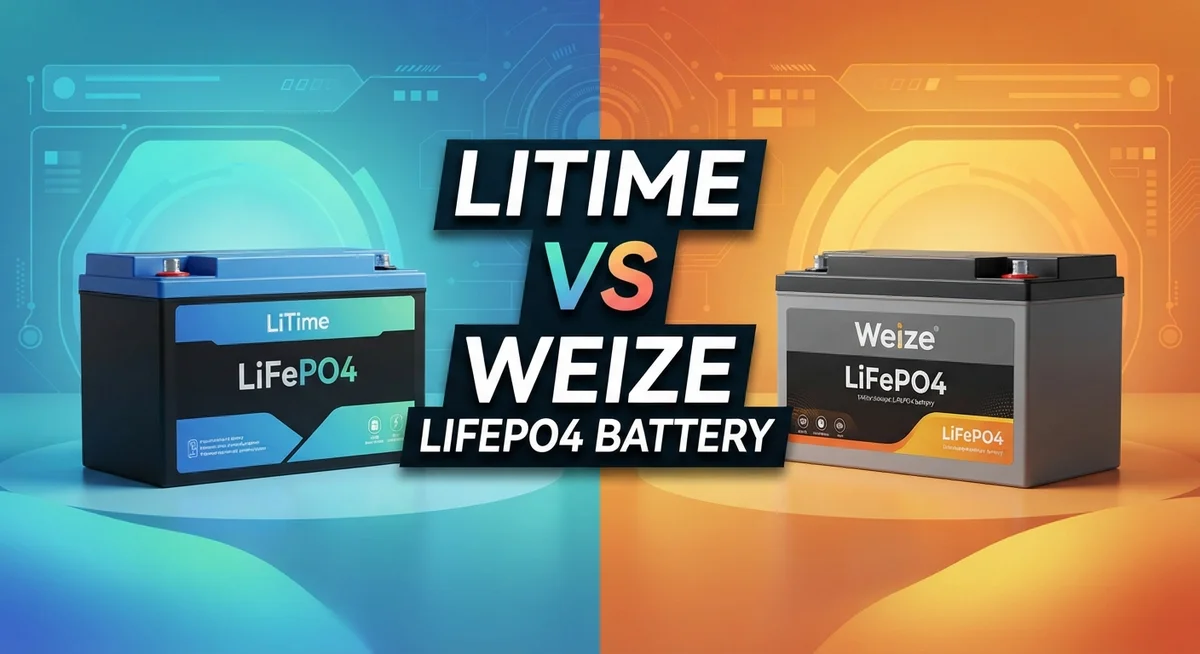
LiTime vs Weize LiFePO4 Battery: Which Offers Better Reliability and Performance?
Choosing a reliable LiFePO4 battery can feel tricky. Two names often come up in this search: LiTime and Weize.
Both brands promise long life and steady power. But they take different paths to get there.
LiTime focuses on strong build quality and dependable BMS protection. Many users trust it for solar setups, RVs, and off-grid living.
Weize leans into cycle life. It claims over 8,000 cycles, making it a strong pick for people who value long term use.
So which battery fits your needs best? This guide breaks down specs, strengths, and weaknesses side by side.
We will look at build quality, protection features, and real world performance. You will also see where each battery shines and where it falls short.
By the end, you will know exactly which battery matches your setup. Let’s get into the details and find your perfect power match.
Quick Comparison: Litime vs Weize LIFEPO4 Battery
| Feature | Litime | Weize LIFEPO4 Battery |
|---|---|---|
| System Voltage | 12V/24V systems | 12.8V system |
| Capacity Options | Multiple capacity options | 100Ah+ capacities |
| Chemistry | LiFePO4 | LiFePO4 |
| Cycle Life | Standard LiFePO4 cycle life | 8,000+ cycles |
| BMS Protection | Reliable BMS protection | BMS gaps, discharge concerns |
| Low-Temp Protection | Inconsistent across models | Limited temp protection |
| Brand Recognition | More established brand | Non-mainstream, higher risk |
| Best Use | Solar, RVs, off-grid | Long-term stationary RV use |
Litime Review

- Space-Saving Powerhouse: 14.49 × 7.44 × 10.63 in, 35% smaller than12V 300Ah lifepo...
- Compact Yet Mighty: From weekend RV trips to off-grid cabins and emergency home power...
Last update on 2026-10-23 / Affiliate links / Images from Amazon Product Advertising API
LiTime produces LiFePO4 batteries designed for solar systems, RVs, and off-grid setups that demand steady, reliable power. The brand serves users who prioritize dependable performance over cutting-edge features.
LiTime offers 12V and 24V systems with multiple capacity options to match different energy needs. Their standout feature is excellent build quality paired with solid BMS protection that keeps your system safe during operation.
The brand demonstrates strong user satisfaction across real-world applications, from cabin power to RV installations. Users report consistent performance and responsive support when issues arise.
One consideration: low-temperature charging protection varies across their product line, so verify specs for your climate before purchasing.
Pros
- Excellent build quality and construction standards
- Reliable BMS protection for system safety
- Strong user satisfaction and support reputation
- Works well with solar arrays and off-grid setups
Cons
- Low-temperature charging protection inconsistent across models
- Cycle life specs less prominent in marketing materials
- Some models lack full temperature range protection
Weize LIFEPO4 Battery Review

- Product Dimensions: (L) 6.54 inch x (W) 4.96 inch x (H) 6.89 inch, Item Weight...
- Built to last : Our 12V 10Ah LiFePO4 Batteries are designed for durability, with...
Last update on 2026-10-23 / Affiliate links / Images from Amazon Product Advertising API
Weize LiFePO4 batteries deliver long-cycle lifespan for users who prioritize durability over brand recognition. These 12.8V systems come in 100Ah and higher capacities, making them suitable for stationary applications like RVs and overlanding setups.
The standout feature is the 8,000+ cycle rating, which stretches 10 times longer than traditional lead-acid batteries. This exceptional cycle life means fewer replacements over years of use, even with regular charging and discharging.
Weize batteries feature a solid BMS (Battery Management System) for basic protection, though the system requires careful charging practices to perform optimally. Users report proven durability beyond 2 years in real-world conditions when handled correctly.
Build quality is functional and straightforward, designed for long-term stationary use rather than premium aesthetics. The battery suits owners willing to follow recommended charging limits (80% maximum charge) for maximum lifespan.
Pros
- Exceptional 8,000+ cycle lifespan delivers 10x longer performance than lead-acid alternatives
- Proven 2+ year durability in real-world RV and overlanding applications
- Solid BMS protection for core battery safety and system stability
- High capacity options (100Ah+) support extended off-grid power needs
Cons
- Discharge protection concerns noted in user reviews require careful monitoring
- Limited temperature protection features for cold-weather charging scenarios
- Non-mainstream brand carries higher risk compared to established competitors
Head to Head: Key Differences
LiTime and Weize take different approaches to LiFePO4 battery design, each with distinct trade-offs for your specific needs.
Brand maturity matters more than you think. LiTime operates as an established player with consistent customer support and warranty reliability. Weize positions itself as a newer contender, which means fewer user reviews and less predictable long-term support channels.
Protection systems differ in key ways. Both brands include Battery Management Systems (BMS), but LiTime’s protection features vary by model. Weize batteries require careful charging practices, with many users limiting discharge to 80% maximum to preserve longevity.
Cycle ratings tell different stories. Weize emphasizes its 8,000+ cycle lifespan as the primary selling point, delivering roughly 10 times longer performance than lead-acid batteries. LiTime focuses less on cycle counts and more on balanced reliability across temperature ranges and discharge scenarios.
Temperature performance splits the two. LiTime’s low-temperature charging protection remains inconsistent across product lines, requiring model-specific verification. Weize offers limited temperature safeguards, making it less suitable for extreme climate installations.
Real-world durability shows mixed signals. Weize demonstrates proven 2+ year performance in stationary RV and overlanding setups where cycle longevity matters most. LiTime shows stronger user satisfaction overall, suggesting fewer unexpected failures during normal operation.
Your use case determines the winner. Choose LiTime if you need reliable, straightforward performance with solid support and operate across varied conditions. Select Weize if you run stationary applications where maximum cycle life justifies accepting a non-mainstream brand and following strict charging protocols.
Which One Should You Buy
LiTime comes out on top in this comparison. It offers consistent BMS protection and stronger brand reliability.
Users also report higher satisfaction with LiTime batteries. This makes it the safer and more dependable choice for most buyers.
Weize still holds value for a specific group. It works well for those who prioritize long cycle life over brand assurance.
Best for each buyer – LiTime: Great for users who want a reliable and well-supported battery for solar systems, RVs, and general off-grid setups. – Weize: Suits budget-conscious users who accept some brand risk in exchange for long cycle life in stationary, long-term applications.
Frequently Asked Questions
Which battery works better for cold weather charging?
LiTime’s low-temperature charging protection varies depending on the model you choose. Some versions include this feature, while others don’t.
You’ll want to check the specific product specs before buying if you live in a cold climate.
Weize doesn’t emphasize temperature protection in its standard lineup. If you charge in freezing conditions regularly, LiTime models with cold-weather protection are your safer bet.
Does Weize really last 10 times longer than lead-acid?
Yes, Weize claims an 8,000+ cycle lifespan. Lead-acid batteries typically deliver 300 to 500 cycles.
That math checks out.
Real-world users report 2+ years of reliable performance in RVs and overlanding setups. The catch: you need to follow proper charging practices, like keeping discharge at 80% maximum to hit those numbers.
Which brand has better customer support?
LiTime operates as an established player with a solid reputation. Users report responsive support and consistent help when issues arise.
Weize is a non-mainstream brand, which means fewer support resources and higher risk if problems occur. You’re betting on longevity claims rather than brand backing.
Can I use either battery in my RV?
Both work in RVs, but they suit different situations. LiTime fits general RV use with reliable protection and peace of mind.
Weize works best for long-term stationary RV setups where you prioritize lifespan over brand recognition. If you move your RV frequently or want hassle-free charging, LiTime is the smarter choice.
What does the BMS actually protect against?
Both batteries include a Battery Management System. LiTime’s BMS offers more consistent protection across models.
Weize’s BMS covers basics but requires you to monitor charging carefully. Neither system is perfect, so read reviews for your specific model before committing.