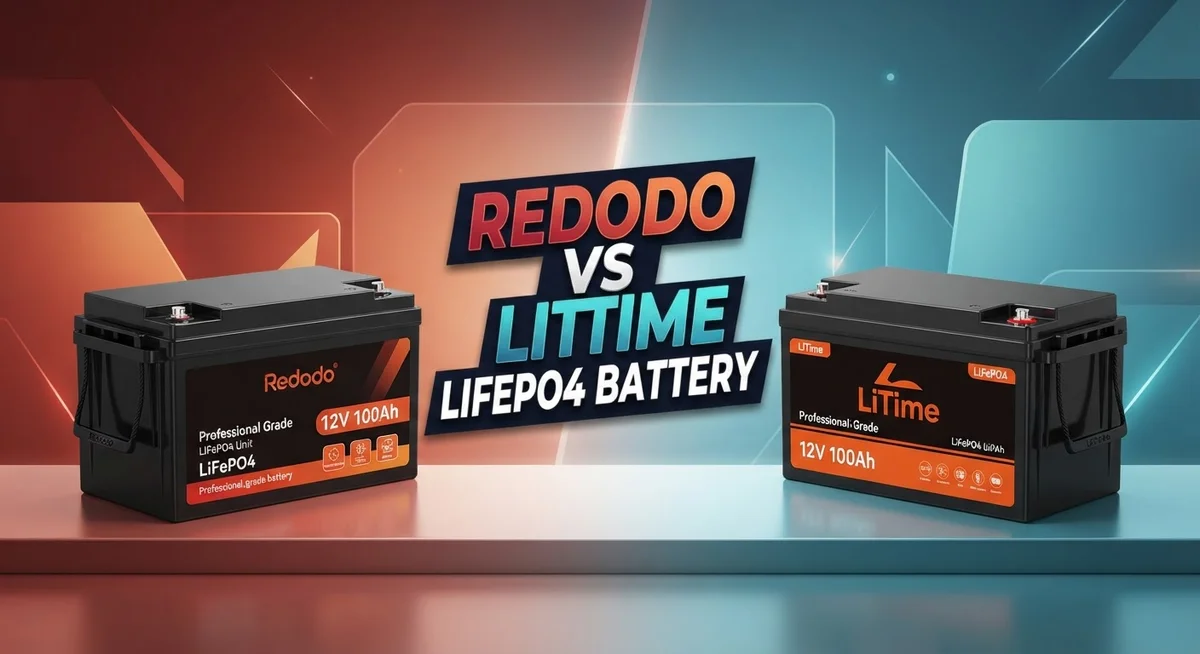
Redodo vs LiTime LiFePO4 Battery: Which Offers Better Performance and Reliability?
Picking the right LiFePO4 battery matters for your power setup. Redodo and LiTime both make quality batteries.
But they serve different needs.
Redodo focuses on compact designs. It fits Group 31 form factors and stays lightweight.
This makes it great for smaller RVs and vans.
LiTime goes bigger. It offers higher capacities up to 460Ah and stronger discharge rates.
This suits marine setups, solar storage, and heavy power demands.
Both brands use solid BMS protection. Both work well in RV and solar applications.
This guide breaks down specs, strengths, and weaknesses for each battery. You will see where Redodo shines and where LiTime takes the lead.
By the end, you will know exactly which battery fits your setup best.
Quick Comparison: Redodo vs Litime LIFEPO4 Battery
| Feature | Redodo | Litime LIFEPO4 Battery |
|---|---|---|
| Capacity Range | 12V 20Ah–320Ah | 12V 100Ah–460Ah |
| Max Model Specs | 320Ah, 4096Wh, 57.17 lbs | 460Ah, 5888Wh, Group 8D |
| BMS Protection | 200A, 20+ protections | 200A cont./400A peak/600A surge |
| Form Factor | Compact Group 31 | Larger, Group 8D |
| Expandability | Limited configurations | 4P4S parallel/series expandable |
| Cold Weather Performance | Poor reported performance | Better cold tolerance |
| Smart Features | Bluetooth on select models | Standard monitoring only |
| Best Use Case | Compact RV/van installations | High-demand marine/solar/RV |
Redodo Review

- 3-Day Fridge Runtime: 3.84kWh capacity powers a 50W fridge for 76+ hours, ensuring...
- Power High-Demand Devices: 2560W continuous output support to run coffee makers (1000W...
Last update on 2026-10-23 / Affiliate links / Images from Amazon Product Advertising API
Redodo makes compact LiFePO4 batteries that prioritize lightweight design and smart monitoring. These batteries work best for RV owners, van lifers, and portable power enthusiasts who need reliable energy without extra bulk.
The standout feature is the Group 31 form factor paired with capacities ranging from 12V 20Ah up to 320Ah. The 100Ah model weighs just 25 lbs, making it easy to install in tight spaces where every pound matters.
Redodo’s advanced BMS includes 20+ protection layers and 200A continuous output on higher-tier models.
Build quality reflects solid engineering for mobile applications. Select models include Bluetooth connectivity and app-based monitoring, letting you track battery health and charge levels from your phone.
The lightweight construction doesn’t sacrifice durability—these batteries handle vibration and movement common in RV life.
Real-world performance shines in mild to moderate climates. Users report consistent power delivery for off-grid weekends and extended van trips.
Cold weather performance is a known limitation, so Redodo works better in temperate regions than extreme winter conditions.
Pros
- Ultra-compact sizing fits tight RV and van compartments
- Lightweight design (100Ah at 25 lbs) reduces installation hassle
- Smart Bluetooth features on premium models for remote monitoring
- Advanced 200A BMS with comprehensive protection suite
Cons
- Entry-level models have limited BMS capabilities
- Poor performance in freezing temperatures
- Lower brand recognition compared to established competitors
- Smaller maximum capacity (320Ah) limits high-demand applications
Litime LIFEPO4 Battery Review

- Space-Saving Powerhouse: 14.49 × 7.44 × 10.63 in, 35% smaller than12V 300Ah lifepo...
- Compact Yet Mighty: From weekend RV trips to off-grid cabins and emergency home power...
Last update on 2026-10-23 / Affiliate links / Images from Amazon Product Advertising API
LiTime LiFePO4 batteries deliver high-capacity power storage for demanding applications. These units range from 12V 100Ah up to 460Ah, making them ideal for marine, RV, and solar systems that need sustained performance and scalability.
The standout feature is the superior discharge capability—a 200A continuous output with peak rates reaching 400A (5 seconds) and 600A (1 second). This means LiTime batteries handle heavy loads without stuttering, and you can wire multiple units in parallel or series to expand your power bank.
LiTime uses Grade-A cells and achieves 99% energy efficiency across the board. The BMS protection is comprehensive, and these batteries tolerate cold weather better than lighter competitors, making them reliable year-round in most climates.
Real-world performance proves rock-solid in RV travel, off-grid solar setups, and marine applications. Users report consistent power delivery even under stress, though larger capacities do add weight—a fair trade for the extra power you get.
Pros
- Massive capacity range (100Ah to 460Ah) covers most power needs
- Peak discharge rates (600A for 1 second) handle high-demand devices
- Expandable via 4P4S parallel and series wiring configurations
- Proven track record in marine, RV, and solar storage applications
Cons
- Heavier units at higher capacities require solid mounting
- Larger Group 8D form factor takes up more physical space
Head to Head: Key Differences
Redodo and LiTime take different approaches to LiFePO4 battery design. Redodo emphasizes portability and smart features, while LiTime prioritizes raw capacity and discharge power.
Size and weight matter most for mobile setups. Redodo’s Group 31 form factor keeps units compact and light, making them ideal for smaller RVs and vans where space is tight.
LiTime batteries use larger Group 8D housings, which means more weight but also more energy storage per unit.
Capacity options reveal different target markets. Redodo maxes out at 320Ah (4096Wh), while LiTime goes up to 460Ah (5888Wh).
If you need massive solar storage or marine power reserves, LiTime’s higher ceiling gives you more flexibility.
Discharge performance shows a clear advantage for LiTime. Both offer 200A continuous output, but LiTime reaches 400A peak (5 seconds) and 600A peak (1 second).
This matters if you run multiple high-draw devices simultaneously. Redodo’s BMS is solid but doesn’t match these peak rates on most models.
Temperature tolerance favors LiTime in cold climates. Redodo batteries show reduced performance in freezing conditions, making them better suited for mild regions.
LiTime handles winter weather more reliably for year-round off-grid use.
Expandability gives LiTime an edge for growing systems. You can wire multiple LiTime batteries in 4P4S configurations (parallel and series).
Redodo doesn’t highlight this modular approach as clearly.
Smart monitoring is Redodo’s strength. Select models include Bluetooth connectivity for real-time app tracking.
LiTime focuses less on smart features and more on pure power delivery.
Choose Redodo for lightweight, connected systems. Choose LiTime for high-capacity, high-demand applications.
Which One Should You Buy
LiTime LiFePO4 Battery takes the win in this comparison. It offers higher capacity options and stronger peak discharge rates than Redodo.
LiTime also supports expandable configurations and handles cold weather better. This makes it a more versatile and reliable choice for tough power needs.
Redodo still holds its own though. It shines in specific setups where space and smart features matter most.
Best for each buyer
- Redodo: Perfect for compact RV or van setups. It suits owners who value weight savings, space efficiency, and smart Bluetooth monitoring.
- LiTime LiFePO4 Battery: Built for high-demand marine, RV, or solar storage systems. It fits users who need sustained power output, easy scalability, and dependable cold-weather performance.
Frequently Asked Questions
Which battery works better for van life and small RV setups?
Redodo shines in compact spaces. Its Group 31 form factor fits tight compartments.
The 100Ah model weighs just 25 lbs, making installation easier in smaller vehicles.
LiTime batteries are heavier and bulkier. They suit larger RVs with dedicated battery compartments.
Choose Redodo if space and weight are your main concerns.
Can I use either battery in freezing temperatures?
LiTime handles cold weather significantly better. It maintains reliable output even in winter conditions.
Redodo struggles in extreme cold, so it’s better for mild climates.
If you travel year-round or live in snowy regions, LiTime is the safer choice.
What if I need to expand my power system later?
LiTime supports expandable configurations. You can wire multiple units in parallel or series (4P4S setup). This lets you add capacity without replacing your entire system.
Redodo doesn’t emphasize expandability. Plan your full capacity needs upfront with Redodo models.
Which battery powers high-demand devices better?
LiTime delivers superior discharge rates. It outputs 200A continuous and reaches 600A peak for 1 second.
This handles multiple high-draw devices running simultaneously.
Redodo’s BMS maxes out at 200A on advanced models. LiTime wins if you run power tools, inverters, or heavy appliances together.
How do I know which one fits my needs?
Ask yourself three questions: Do I need compact sizing? Choose Redodo.
Do I need massive capacity or cold weather performance? Choose LiTime.
Do I plan to expand later? LiTime is your answer.
Redodo targets mobile, weight-conscious users. LiTime serves power-hungry, stationary installations.