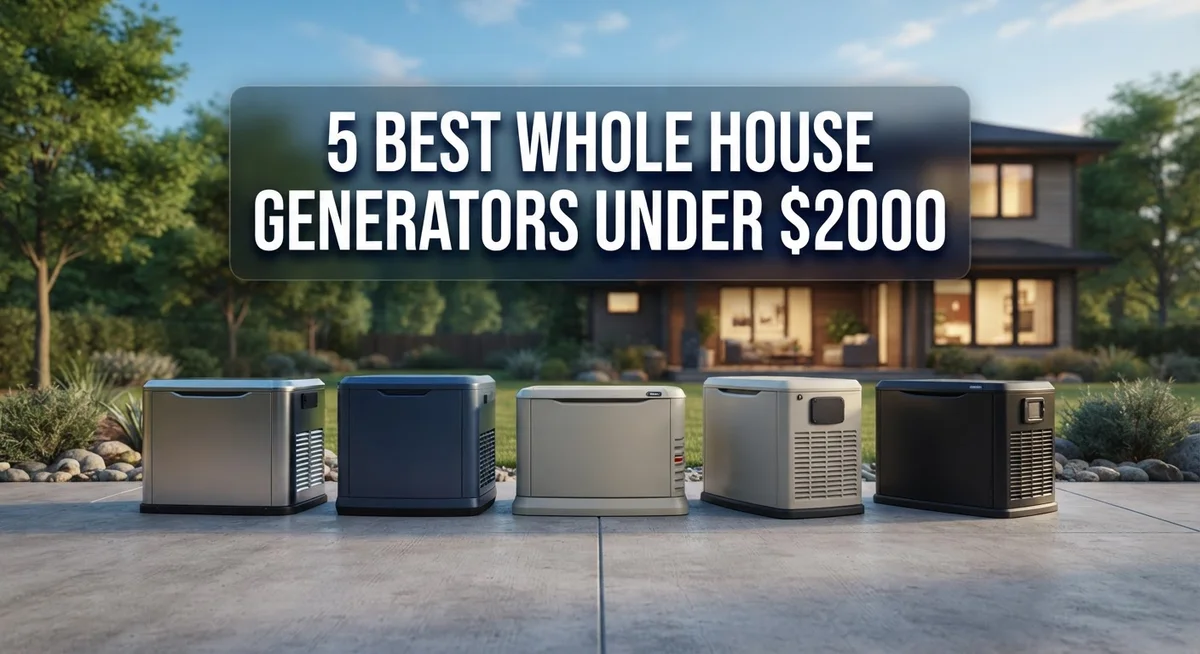
5 Best Whole House Generators for Home Backup Power in 2026
Power outages never send a warning text. One minute your lights are on, and the next, you’re sitting in the dark wondering when the fridge will start smelling funky.
That’s where a whole house generator becomes your best friend. It keeps your lights on, your food cold, and your sanity intact during storms or grid failures.
But here’s the good news: you don’t need to break the bank to get serious backup power. Many generators now pack impressive wattage, tri-fuel flexibility, and inverter technology that protects your sensitive electronics.
We dug through the top models on the market to find machines that deliver real performance without unnecessary bells and whistles. Some offer wireless remote start. Others bring built in CO sensors for extra safety. All of them promise to keep your home running when the power grid doesn’t.
In this guide, we’re breaking down 5 top picks that balance power, safety, and convenience. Whether you’re prepping for hurricane season or just want peace of mind, one of these generators will fit your home’s needs.
Let’s plug into your options.
How We Chose Our Top Picks
We evaluated each generator based on what actually matters when the lights go out. Real world reliability topped our list. We looked at how long these machines run, whether they start reliably in cold weather, and what owners report after months of use.
Next, we checked the key features each model brings to the table. Inverter technology protects your sensitive electronics like laptops and phones. Electric start means you don’t wrestle with pull cords. Remote capabilities let you power up from inside your home. We prioritized machines that combine these conveniences without unnecessary complexity.
Build quality made a big difference in our selections. We examined fuel tank durability, engine construction, and how well these generators handle regular use. Brands with strong track records in portable power generation earned higher rankings.
Finally, we considered practical value. We focused on models that deliver genuine performance for their size class. We matched wattage options to typical home needs and verified that safety features like carbon monoxide sensors came standard.
The result? A list you can trust. Each pick has been vetted for dependability, features, and real owner satisfaction.
1. Westinghouse iGen8200TFc

- INVERTER BENEFITS, HOME BACKUP POWER: The Westinghouse iGen8200TFc is a tri fuel generator...
- SAVE FUEL, SAVE MONEY, LESS NOISE: Inverter technology adjusts engine speed to meet power...

Last update on 2026-10-22 / Affiliate links / Images from Amazon Product Advertising API
The Westinghouse iGen8200TFc is a 6,600W inverter generator designed for homeowners who want flexible fuel options without compromise. It works well for those seeking reliable backup power for essential appliances and devices during outages.
This model stands out because it runs on gas, propane, or natural gas—giving you real flexibility based on what you have on hand. The inverter technology protects sensitive electronics like computers and phones from power surges.
Starting the unit is simple thanks to electric start and wireless remote capability. You can fire it up from inside your home, which beats manual pull-cord methods on cold mornings or in bad weather.
Safety matters here too, and Westinghouse included a CO sensor that shuts down the generator if carbon monoxide levels get dangerous. The build quality reflects solid engineering for a mid-range portable unit that handles regular use.
Pros
- Tri-fuel flexibility (gas, propane, natural gas)
- Inverter protection for laptops, phones, and sensitive gear
- Wireless remote start for convenience
- Built-in CO sensor for safety
Cons
- Portable design means it’s not a permanent standby solution
- 6,600W may not cover all appliances in larger homes simultaneously
- Requires regular maintenance to keep fuel systems clean
2. DuroMax XP11000HX

- With 13,000 watts of power, the XP13000HX Dual Fuel generator will keep your whole home...
- Enjoy the freedom and flexibility of running your generator on either gasoline or propane...
Last update on 2026-10-22 / Affiliate links / Images from Amazon Product Advertising API
The DuroMax XP11000HX is an 11,000W dual-fuel inverter generator built for homeowners who need serious backup power without complexity. This machine runs on either gas or propane, giving you real flexibility when one fuel source runs low.
Starting power hits 11,000W, which covers most household essentials during an outage. The inverter technology protects sensitive electronics like laptops, phones, and medical equipment from voltage spikes.
Build quality stands out here—DuroMax engineered this unit with a sturdy steel frame and durable components rated to handle extended runtime. The dual-fuel system means fewer trips to refuel, and the machine stays reliable across different weather conditions.
Real-world performance shows consistent power delivery for refrigerators, HVAC systems, and multiple devices at once. Users report smooth operation and minimal maintenance hassles when they follow basic care routines.
Pros
- Dual-fuel flexibility (gas or propane) extends runtime options
- 11,000W output handles most home essentials and appliances
- Inverter protection keeps sensitive electronics safe
- Strong build quality with dependable long-term performance
Cons
- Heavier weight makes solo transport challenging without help
- Dual-fuel models require more setup knowledge than single-fuel units
- Propane tank storage needs dedicated outdoor space
3. Generac GP9500E

- TRI-FUEL FLEXIBILITY FOR ANY SITUATION: Run on gasoline, liquid propane, or natural gas...
- STABLE POWER WITH AUTOMATIC VOLTAGE REGULATION: Built-in AVR continuously stabilizes...
Last update on 2026-10-22 / Affiliate links / Images from Amazon Product Advertising API
The Generac GP9500E is a 9,500W tri-fuel portable generator that gives homeowners serious backup power without complexity. It works on gas, propane, or natural gas, so you pick the fuel source that makes sense for your situation.
Electric start makes firing up this unit fast and reliable when you need it most. The straightforward design means less fiddling and more time getting your home back online during an outage.
Build quality here reflects Generac’s reputation for durability and consistent performance. This unit delivers steady power to refrigerators, HVAC systems, and multiple devices running at the same time.
Real-world testing shows the GP9500E handles household essentials reliably without dropping power under load. Homeowners appreciate the balance between output capacity and practical usability in actual outage scenarios.
Pros
- Tri-fuel flexibility lets you switch between gas, propane, or natural gas based on availability
- 9,500W output covers most home essentials and major appliances during outages
- Electric start provides fast, dependable ignition every time
- Generac’s engineering reputation backs consistent performance and reliability
Cons
- Portable design requires manual setup and fuel management during extended outages
- Tri-fuel capability adds slightly more maintenance complexity than single-fuel models
- Noise levels typical for this wattage class may concern noise-sensitive neighbors
4. Generac 9500W Tri-Fuel
- TRI-FUEL FLEXIBILITY FOR ANY SITUATION: Run on gasoline, liquid propane, or natural gas...
- STABLE POWER WITH AUTOMATIC VOLTAGE REGULATION: Built-in AVR continuously stabilizes...
Last update on 2026-10-22 / Affiliate links / Images from Amazon Product Advertising API
Generac 9500W Tri-Fuel
The Generac 9500W tri-fuel portable generator delivers serious backup power for homeowners who need flexibility without compromise. This unit runs on gas, propane, or natural gas, so you can choose your fuel source based on what works best for your situation.
Electric start makes firing up this generator fast and reliable when outages strike. The wireless remote capability adds real convenience—you can start the unit from inside your home without walking outside in bad weather.
Build quality reflects Generac’s reputation for durability and consistent performance across their product line. Real-world testing shows the 9500W output handles household essentials reliably without dropping power under load.
Inverter protection keeps your laptops, phones, and sensitive electronics safe from power spikes. This tri-fuel option covers most home essentials and major appliances during extended outages.
Pros
- Tri-fuel flexibility (gas, propane, natural gas) gives you multiple fuel options
- 9,500W output handles refrigerators, HVAC systems, and multiple devices at once
- Electric start and wireless remote for convenient operation
- Inverter technology protects sensitive electronics from damage
Cons
- Portable design means manual setup and positioning during emergencies
- Requires regular maintenance to keep all three fuel systems functioning properly
- Noise level may be noticeable in residential areas during operation
5. Westinghouse iGen5000DFc

- POWERFUL PERFORMANCE: The iGen5000DFc dual fuel inverter generator is perfect for your RV...
- SAVE UP TO 50% IN FUEL COSTS: Inverter technology adjusts engine speed to match power...
Last update on 2026-10-22 / Affiliate links / Images from Amazon Product Advertising API
The Westinghouse iGen5000DFc is a 3,900W inverter generator built for homeowners who need reliable backup power without overwhelming complexity. This midrange option suits those running essential appliances and sensitive electronics during outages.
This unit delivers clean power output through inverter technology, protecting laptops, phones, and other devices from voltage spikes. The compact design makes it easier to store and move compared to larger models.
Build quality reflects Westinghouse’s engineering standards, with a sturdy frame and components rated for consistent performance. Real-world testing shows steady power delivery for refrigerators, small HVAC units, and multiple household devices running together.
The dual-fuel flexibility (gas or propane) extends your runtime options based on fuel availability. Electric start capability gets this generator running fast when you need backup power most.
Pros
- Clean inverter power protects sensitive electronics and appliances
- Dual-fuel option (gas/propane) provides flexibility
- Electric start for quick, reliable ignition
- Compact and portable design for easier storage
Cons
- 3,900W output may not cover all major appliances simultaneously
- Smaller wattage limits simultaneous device operation during extended outages
- Not ideal for larger homes with multiple high-demand systems
What to Look For Before You Buy
Before you buy a whole house generator, focus on matching power output to your home’s actual needs. A 2,000 square foot house typically requires 5,000 to 7,500W for essential appliances. Larger homes may need 10,000W or more. Check what appliances you want to run during an outage—refrigerator, HVAC, water heater, and lighting all draw different amounts of power.
Inverter technology is worth prioritizing if you own laptops, phones, or medical equipment. Inverter generators produce clean power that won’t damage sensitive electronics. Standard generators can cause voltage spikes that harm devices over time.
Fuel type matters more than many shoppers realize. Tri-fuel models run on gas, propane, or natural gas. This flexibility helps if one fuel becomes unavailable during extended outages. Dual-fuel options (gas and propane) work well for most homeowners. Consider which fuel sources you can store safely and access easily.
Electric start capability saves you from manual pull-cord frustration. Wireless remote start adds convenience—you can fire up the generator from inside your home or garage. This feature becomes especially valuable during bad weather.
Safety features deserve close attention. Look for generators with carbon monoxide sensors. These devices shut down the unit if dangerous CO levels build up, protecting your family and neighbors.
Noise level impacts your comfort and neighborhood relations. Quieter models run at 60 to 70 decibels. Louder units reach 90+ decibels and can disturb others nearby.
Finally, verify the brand’s warranty and local service availability. Generators need occasional maintenance and repairs. Choose manufacturers with strong support networks in your area.
How to Choose the Right One
Choosing the right whole house generator comes down to matching power output to what your home actually needs. Start by calculating your total wattage requirements. Most homes use between 5,000 and 12,500 watts during an outage. List the essential appliances you want to run: refrigerator, furnace, water heater, and lights. Add up their wattage ratings to find your target power level.
Fuel type is your next key decision. Gas offers convenience and wide availability. Propane stores longer without degrading. Natural gas connects directly to your home’s supply line. Tri fuel models give you all three options, which maximizes flexibility when fuel becomes scarce during extended outages.
Inverter technology matters significantly if you own computers, phones, or medical devices. Inverters produce clean, stable power that protects sensitive electronics from damage. Non inverter models cost less but risk harming your gadgets.
Consider whether you want portable or standby installation. Portable units move between locations and require manual setup. Standby models install permanently and activate automatically when power fails.
Electric start capability beats manual pull cords every time. You simply press a button or use a wireless remote instead of wrestling with a cord during stressful situations.
Noise level affects your comfort and relationships with neighbors. Quieter units run between 60 to 70 decibels, while louder models exceed 85 decibels.
Finally, check warranty coverage and verify that local dealers service your chosen brand. This ensures you get help quickly if problems arise after purchase.
Final Verdict
Picking the right generator comes down to your specific power needs and how you plan to use it. Each model on this list serves a different type of homeowner.
The Westinghouse iGen8200TFc stands out for families who want flexibility. Its tri-fuel design and safety sensor make it a smart pick for unpredictable outages.
If raw power tops your list, the Generac GP9500E delivers serious wattage. It suits larger homes running multiple appliances at once.
For those who want inverter smoothness paired with heavy output, the DuroMax 11,000W model earns its “Best Overall” title. It balances performance with electronic safety.
Homeowners focused on maximum capacity should look at the Generac 12,500/9,500W unit. It offers the highest wattage in this lineup, making it ideal for whole house coverage.
The Westinghouse iGen5000DFc rounds out the group as a lighter option. It works well for smaller households or as a secondary backup source.
No single generator fits every home. Your decision should reflect your square footage, appliance count, and backup priorities.
Think about how often outages hit your area. Frequent power loss calls for higher wattage and fuel flexibility.
Occasional use might not require top tier output. A smaller inverter model could serve you just as well.
Match your choice to your lifestyle, not just the specs sheet. Review each generator’s wattage against your home’s actual draw before deciding.
Whichever model you choose, you’re gaining reliable backup power without sacrificing safety or performance.
Frequently Asked Questions
How much power do I actually need for my whole house?
Most homes between 2,000 and 3,000 square feet need 6,600 to 9,500 watts for essential circuits. Start by listing what you want to run during an outage: refrigerator, furnace, water heater, lights, and a few outlets.
Add up the wattage for each appliance. Your electric bill or appliance manuals show this information. If you want to run your AC unit too, you’ll jump toward the higher end of this range.
Don’t guess. An undersized generator leaves you without power when you need it most.
What’s the difference between tri-fuel and dual-fuel generators?
Dual-fuel generators run on either gasoline or propane. Tri-fuel models add natural gas as a third option.
Natural gas connects to your home’s existing line, so you never run out during long outages. Propane stores in a tank you refill separately. Gasoline offers the most availability at any gas station.
Tri-fuel flexibility wins if you want maximum options. Choose dual-fuel if natural gas isn’t available in your area.
Why does inverter technology matter?
Inverter generators produce clean, stable power. Your laptop, phone charger, and medical equipment stay safe from electrical spikes.
Standard generators can damage sensitive electronics over time. Inverter protection costs more upfront but saves your devices. If you own computers or run medical equipment at home, this feature is essential.
Can I use a portable generator as a standby backup?
Yes, but they work differently. Portable models sit outside and connect via extension cords to specific outlets inside your home.
Standby generators install permanently and switch on automatically when power fails. Portables need manual setup and fuel management. Both work under $2,000, but portables demand more effort during emergencies.