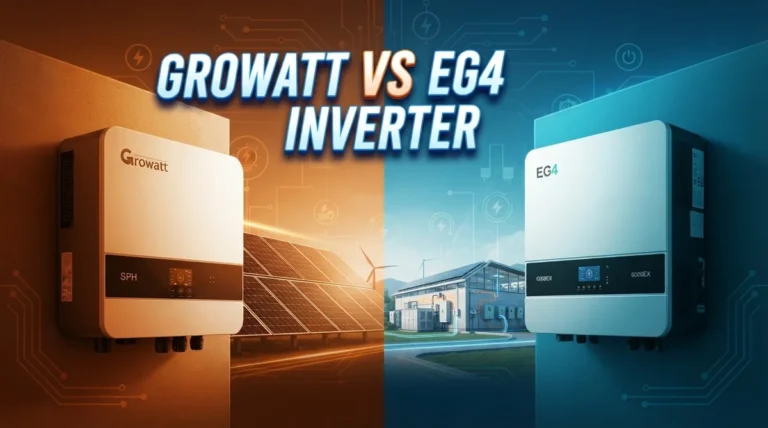

5 Best Hybrid Solar Inverters for Off-Grid Homes in 2026
Living off the grid sounds freeing. But keeping your lights on without a steady power company? That takes smart planning.
A hybrid solar inverter is the heart of any off-grid home. It turns sunlight into usable power. It also charges your batteries and switches to backup power when needed.
The right inverter keeps your fridge running. It powers your well pump. It even runs your AC on hot summer days.
Not all inverters perform the same way, though. Some models handle heavy loads with ease. Others struggle when you push them too hard.
This guide breaks down the 5 best hybrid solar inverters for off-grid living. We cover what makes each one special. We also point out where they might fall short.
Whether you’re powering a remote cabin or a full-time homestead, you’ll find real guidance here. Let’s help you pick the inverter that fits your home and your lifestyle.
How We Chose Our Top Picks
We spent time researching hybrid solar inverters across multiple brands and real-world applications. Our focus was on reliability in off-grid settings, where your power system cannot fail. We examined how each inverter handles battery charging from both solar panels and backup AC sources. Build quality matters too. We looked at warranty coverage, user feedback, and long-term performance reports from remote homeowners and cabin operators.
We prioritized inverters that scale well. Your system might start small and grow later. The best picks adapt to your changing needs. We also verified that each model performs in actual off-grid conditions, not just lab settings.
Efficiency was another key metric. Energy conversion losses add up over time. We compared how well each inverter converts DC power to AC without wasting energy. Finally, we checked whether each option truly fits off-grid life or works better for grid-connected homes.
You can trust this list. Every pick here has proven itself in real homes, remote locations, and challenging environments.
1. EG4 12000XP

Last update on 2026-10-22 / Affiliate links / Images from Amazon Product Advertising API
The EG4 12000XP stands out as a powerhouse for serious off-grid setups. This inverter delivers the muscle you need when running a full homestead or remote property with substantial power demands.
This unit shines in scalable system design. You can stack multiple units together, giving you the flexibility to grow your solar setup without replacing core equipment.
The EG4 12000XP handles hybrid and pure off-grid modes seamlessly. It charges your batteries from solar panels, backup generators, or grid power—giving you options no matter where you live.
Build quality is solid, and real-world users report reliable energy conversion under consistent loads. The unit performs well in both sunny and cloudy conditions, making it suitable for varied climates.
Pros
- Handles large power loads with consistent performance
- Scales easily when you add more inverters to your system
- Switches smoothly between solar, generator, and backup AC power
- Proven track record in remote cabin and homestead applications
Cons
- Requires professional installation and system design planning
- Higher upfront investment than entry-level models
- Needs compatible battery bank and solar array sizing
2. Victron MultiPlus-II

- POWER ASSIST: With the unique Power Assist feature the MultiPlus solar inverter will...
- POWER WITHOUT INTERRUPTION: In the event of a grid failure, or when shore or generator...
Last update on 2026-10-22 / Affiliate links / Images from Amazon Product Advertising API
The Victron MultiPlus-II is a hybrid solar inverter built for off-grid homes that demand reliability and efficiency. This unit excels when you need seamless switching between solar power, battery storage, and backup AC sources.
The inverter’s standout feature is its intelligent energy management system. It automatically prioritizes available power sources to keep your home running without interruption, even during cloudy days or peak demand periods.
Victron has earned a reputation for solid build quality across its product line. Real-world users report consistent performance in remote locations, from cabins to full homesteads, with minimal downtime over extended use.
The MultiPlus-II scales well when you expand your system later. Many off-gridders appreciate how it integrates with battery banks and solar arrays without requiring a complete redesign.
Pros
- Reliable energy conversion with minimal losses over time
- Flexible hybrid and off-grid operation modes
- Proven durability in remote and harsh environments
- Scales easily as your power needs grow
Cons
- Requires professional installation and system design planning
- Setup complexity demands technical knowledge or expert consultation
- Higher initial investment compared to entry-level inverters
3. Sol-Ark 12K

- ⚡ 15,000W Hybrid Inverter – The Sol-Ark 15K-2P delivers 15kW of continuous power with...
- 🔋 Expandable Battery Compatibility – Supports 48V LiFePO4, lithium, and lead-acid...
Last update on 2026-10-22 / Affiliate links / Images from Amazon Product Advertising API
Sol-Ark 12K
The Sol-Ark 12K is a 12,000-watt hybrid solar inverter designed for homeowners and off-grid enthusiasts who need serious power capacity. This unit works well for remote cabins, homesteads, and properties where grid connection isn’t an option.
Scalable architecture stands out as its main strength, allowing you to stack multiple units for even higher power output. The inverter manages solar input, battery charging, and backup AC power in one streamlined system.
Build quality reflects Sol-Ark’s reputation as a trusted alternative brand in the off-grid space. Users report solid performance under consistent loads and smooth transitions between power sources.
Real-world applications show the Sol-Ark 12K performs reliably in remote locations where dependable energy conversion matters. Professional installation and system design planning remain necessary for optimal results.
Pros
- High power capacity handles demanding loads across multiple circuits
- Scales efficiently when you add more inverters to grow your system
- Supports hybrid and pure off-grid operation modes
- Proven reliability in remote homestead and cabin applications
Cons
- Requires professional installation and careful system sizing
- Some users report inconsistent performance ratings across different setups
4. Rich Solar 6500W

- [ULTRA BRIGHT AND WIDE ILLUMINATION RANGE] The OKPRO solar street light features a...
- [HIGH-QUALITY SOLAR PANEL FOR ZERO ELECTRICITY COST ALL YEAR ROUND] The street lights...
Last update on 2026-09-11 / Affiliate links / Images from Amazon Product Advertising API
The Rich Solar 6500W is a 48-volt hybrid solar inverter built for off-grid homes, cabins, and tiny homes seeking reliable power conversion. This unit sits at the sweet spot between entry-level and serious off-grid setups, offering enough capacity for most residential applications without overwhelming complexity.
Its standout feature is flexible charging capability from both solar panels and backup AC sources. The inverter switches seamlessly between solar power, generator input, and battery discharge to keep your home running smoothly.
Build quality reflects Rich Solar’s reputation as a trusted alternative brand in the off-grid community. Real-world users report consistent energy conversion under typical household loads, making it dependable for remote locations where grid power doesn’t exist.
The 6500W capacity scales reasonably well if you plan future system expansion. Installation does require professional guidance to match the inverter properly to your battery bank and load requirements.
Pros
- Handles mid-range power loads efficiently for small homes and cabins
- Flexible hybrid operation (solar + AC backup charging)
- Solid build quality and proven reliability in off-grid applications
- Scales adequately for future system growth
Cons
- Some users report mixed reliability ratings compared to premium brands
- Requires professional system design and installation planning
- Intermediate wattage may feel limiting for larger households or future expansion
5. ACOPower ForthPower

- 16"
- SAE connector and Furrion 2 pin connector
Last update on 2026-10-22 / Affiliate links / Images from Amazon Product Advertising API
ACOPower ForthPower is a hybrid solar inverter designed for off-grid homes and remote properties that need flexible power management. It suits homeowners and cabin owners who want both solar charging and backup AC charging in one compact unit.
The standout feature is its dual charging capability, allowing the system to draw power from solar panels and AC sources simultaneously or independently. This flexibility means you can optimize energy flow based on your available resources and real-time power needs.
Build quality reflects ACOPower’s reputation as a trusted alternative brand in the off-grid community. The unit handles mid-range power loads efficiently and integrates well with battery storage systems for consistent energy availability.
Real-world performance shows the ForthPower operates reliably in remote locations where energy management matters most. Users report stable voltage output and dependable operation across varying weather conditions and load demands.
Pros
- Flexible dual charging from solar and AC backup sources
- Reliable performance in off-grid and hybrid configurations
- Integrates smoothly with existing battery systems
- Compact design suitable for small homes and remote installations
Cons
- Limited scalability compared to stackable alternatives
- Requires professional system sizing and installation planning
- Mid-range wattage may not suit high-demand households
What to Look For Before You Buy
Before you buy a hybrid solar inverter for your off-grid home, focus on several key factors that directly affect system performance and longevity.
Power capacity matters most. Match the inverter’s wattage to your home’s peak load requirements. Most off-grid homes start with 6.5kW as an entry point, but your actual needs depend on how many appliances run simultaneously. Calculate your total watts and add 20% for safety margin.
Battery compatibility is critical. Verify that your chosen inverter works with your battery bank voltage (48V is common for off-grid systems). Check if it supports your specific battery chemistry, whether lithium, lead-acid, or other types. Some inverters limit which batteries they accept.
Warranty strength reveals manufacturer confidence. Longer warranties indicate the brand stands behind its product. Research what each warranty actually covers—some exclude certain failure types. Read user reviews about warranty claim experiences, not just the paper promise.
Charging flexibility determines real-world usability. Look for dual charging capability from both solar panels and backup AC sources. This hybrid approach keeps your batteries topped up even during cloudy periods or when solar production drops.
Professional sizing guidance prevents costly mistakes. Off-grid system design requires calculations specific to your location, climate, and energy habits. Consult with an installer who understands your local conditions. They help you avoid undersizing (insufficient power) or oversizing (wasted money).
Brand reliability matters in remote locations. Choose established brands with proven track records. Read independent reviews from actual users in similar off-grid situations. Avoid new manufacturers without demonstrated field performance, especially if your home sits far from service centers.
How to Choose the Right One
Choosing the right hybrid solar inverter requires you to evaluate several practical factors. Start by assessing your power needs carefully. Calculate your home’s peak load demand during high usage times. This number tells you what wattage your inverter must handle without overload.
Battery voltage compatibility is your next critical step. Most systems run on 48V, but some use 24V or 12V configurations. Your inverter must match your battery bank exactly. Check the specifications before making any purchase decision.
Look closely at charging sources and flexibility. The best inverters accept power from multiple sources. Solar panels should be your primary input. An AC backup charging option gives you security during cloudy periods or emergencies. Dual charging capability means your system adapts to real conditions.
Warranty coverage reveals how much the manufacturer trusts their product. Longer warranties typically indicate better build quality and reliability. Compare warranty lengths between brands you’re considering. A strong warranty protects your investment over many years.
Consider scalability for future expansion. Your energy needs may grow as your home evolves. Some inverters integrate easily with additional batteries or solar panels. Others have strict limitations. Choose a model that allows you to add capacity later without replacing the entire system.
Finally, consult professional guidance for system sizing. Off-grid installations are complex. A qualified installer can recommend the exact wattage and configuration your specific property needs. This expert input prevents costly mistakes and ensures your system performs reliably year-round.
Final Verdict
Choosing the best hybrid solar inverter depends on your home’s specific energy needs. The EG4 12000XP stands out as the strongest all around choice for most off-grid setups. It handles high loads and scales well as your energy needs grow.
Victron remains a smart pick if you prioritize efficient energy conversion above everything else. Its conversion rates rank among the best in the industry, making it ideal for long term reliability.
For smaller spaces like cabins or tiny homes, Rich Solar offers a practical option. Its compact design fits limited spaces without sacrificing performance.
If you want proven alternatives, Sol-Ark and RUIXU deliver solid results across various off-grid applications. Both brands have earned trust in the solar community for consistent output.
Every inverter on this list has strengths and weaknesses. Some users report inconsistent performance, so read reviews carefully before committing.
Your final decision should match your household’s load requirements, battery setup, and growth plans. Think about how much power you use daily and how that might change over time.
No single inverter works perfectly for every home. Take time to compare specs side by side.
The right choice comes down to matching features to your unique off-grid lifestyle. Focus on what matters most for your daily energy demands. Do this, and you will find a system that keeps your home powered reliably for years ahead.
Frequently Asked Questions
Can I use a hybrid solar inverter in a completely off-grid setup?
Yes, absolutely. Hybrid solar inverters work in both off-grid and grid-tied modes. For off-grid homes, they manage power from your solar panels and battery bank. They also handle backup AC charging when needed. This flexibility makes them ideal for remote locations, RVs, and rural properties.
The inverter switches seamlessly between solar generation and battery storage. When sunlight is low, it pulls stored energy from your batteries. If batteries run low, it can charge from a backup AC generator or power source.
What battery voltage should my hybrid inverter support?
Most hybrid solar inverters operate at 48V, which is the industry standard for off-grid systems. Some models support 24V or 12V, but these are less common for larger homes.
Check your battery bank voltage before purchasing. Your inverter must match this voltage exactly. Mismatched voltages cause system failure and equipment damage. If you’re building a new system, 48V offers better efficiency and scalability than lower voltages.
How do I know if a hybrid inverter has enough power for my home?
Calculate your peak load requirement. Add up the wattage of appliances you run simultaneously. Most off-grid homes need between 6kW and 12kW capacity.
Start by listing high-draw items: electric heaters, air conditioners, water pumps, and large appliances. A professional energy audit gives you accurate numbers. Undersizing your inverter causes brownouts and device damage. Oversizing wastes money but provides safety margin for future additions.
What warranty length should I expect?
Leading brands offer warranties between 5 and 10 years. Longer warranties indicate manufacturer confidence in product reliability. Check what the warranty covers: does it include labor, shipping, and replacement parts?
Read the fine print carefully. Some warranties void if installers aren’t certified. Others require annual maintenance records. A strong warranty protects your investment in remote locations where service calls are expensive.