Ryobi BT3000 Table Saw Review 2026: Still Worth It?
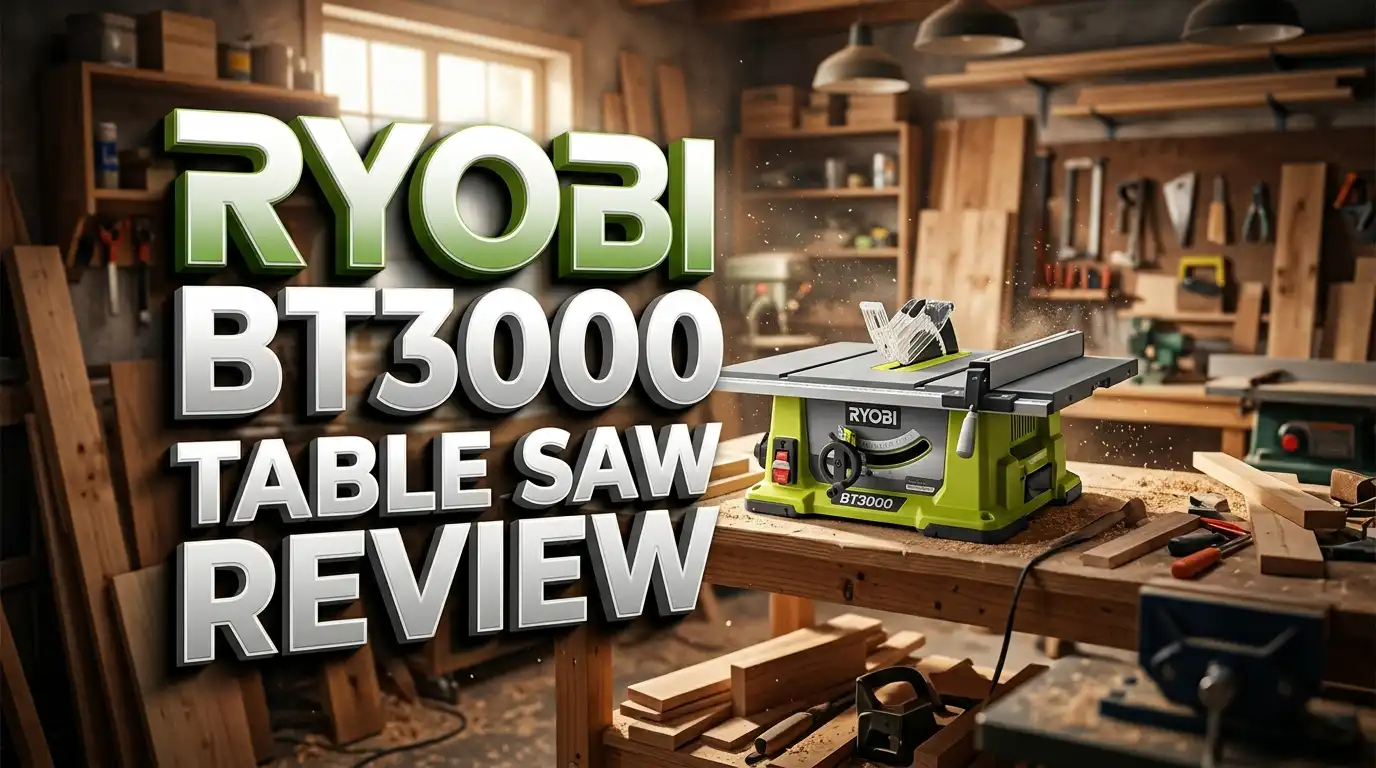
If you are a woodworker searching for a budget table saw with unique features, the Ryobi BT3000 probably caught your eye. It combines a sliding miter table, a built-in router mount, and a compact footprint into one affordable package.
But here is the big question. Should you buy a used Ryobi BT3000 in 2026? Is it still a smart investment, or are you better off spending your money on something newer?
This review covers everything from motor power and build quality to dust collection and real-world performance. We break down the pros, the cons, and the honest truth about this iconic little saw.
Stick around. By the end of this post, you will know exactly whether the BT3000 fits your workshop or your wallet.
Key Takeaways
- The Ryobi BT3000 is a discontinued 10-inch table saw that was first introduced in the early 1990s. You can only find it on the used market today. Prices typically range from $75 to $250 depending on condition and included accessories.
- It features a unique sliding miter table instead of a traditional miter gauge. This design allows for accurate crosscuts without a standard miter slot. However, it requires frequent squaring and careful adjustment.
- The saw runs on a 15-amp, 120V universal motor that spins at approximately 4,800 RPM. This motor is loud and less powerful than induction motors found on contractor saws. It works fine for light to medium-duty tasks.
- A built-in router table mount is included on the left side of the unit. While this sounds great on paper, many users report it is basic and limited compared to a standalone router table.
- Dust collection on the BT3000 is excellent for its class. A plastic shroud beneath the blade connects to a 2.5-inch port. A shop vac can capture about 90% of the sawdust.
- Replacement parts can be hard to find since the saw has been out of production for years. Drive belts, shims, and clamps may require aftermarket sourcing through Amazon or specialty woodworking shops.
Ryobi BT3000 Table Saw Overview

- Stens replacement parts have become a favorite among lawn and landscape professionals...
The Ryobi BT3000 is a 10-inch table saw that Ryobi launched in the early 1990s. It was one of Ryobi’s first serious entries into the home workshop table saw market. The saw features an aluminum table surface mounted on a stamped steel base.
This saw was sold as a compact, multi-function unit. It combined a table saw, a sliding miter table, and a router table mount into one machine. The original retail price was around $400 to $500 new.
Ryobi eventually replaced the BT3000 with the BT3100, which improved the blade raise mechanism and shim design. Today, you can only find the BT3000 on the secondhand market. Craigslist, Facebook Marketplace, and estate sales are common sources.
The BT3000 carved out a niche among hobbyists who needed a space-saving, all-in-one solution. It is not a professional-grade saw. But for light ripping, crosscutting, and occasional dado work, it holds its own.
Motor and Power Performance
The Ryobi BT3000 uses a 15-amp, 120-volt universal direct-drive motor. It produces roughly 1.5 HP and runs at about 4,800 RPM. This is enough power for cutting softwoods, plywood, and thinner hardwoods.
However, universal motors have clear drawbacks. They are significantly louder than induction motors. They also generate more vibration. Over time, the carbon brushes wear down and need replacement.
Direct-drive means the motor connects to the blade without a belt system in some configurations. This simplifies maintenance but reduces torque delivery. If you try to rip thick oak or maple, the blade may slow down noticeably.
For a hobbyist cutting pine, MDF, or thin plywood, the motor performs well. It is not suitable for heavy production work. Professional woodworkers will find the power lacking for dense hardwoods and thick stock. Think of it as a saw for weekend projects, not daily shop use.
Build Quality and Table Surface
The BT3000 uses an aluminum table surface rather than cast iron. Aluminum is lighter, which makes the saw easier to move. But it also flexes more under heavy workpieces.
The base is made from stamped steel that bolts together. This construction feels less solid than welded or cast iron cabinet saws. Some users report wobble and vibration at the base, especially on uneven floors.
The aluminum surface does stay flat for the most part. However, it can develop scratches and dents more easily than a cast iron top. Applying a quality paste wax helps materials slide smoothly across the table.
One real concern is long-term durability. The plastic components, cam clamps, and adjustment levers can wear down. Finding exact replacements gets harder each year. Despite these issues, many BT3000 units from the 1990s are still running today with proper care.
Top 3 Alternatives for Ryobi BT3000 Table Saw
1. DEWALT DWE7491RS 10-Inch Jobsite Table Saw

- Rack & Pinion Telescoping Fence System Make fence adjustments fast, smooth and accurate
- Patented material support, can be used for narrow rip cuts.
This is one of the most popular jobsite table saws available. It features a 15-amp motor, 32.5-inch rip capacity, and a rolling stand. It delivers far more power and accuracy than the BT3000 at a competitive price.
2. SKIL TS6307-00 15 Amp 10-Inch Table Saw

- RACK AND PINION FENCE RAILS - Ensures fence stays parallel to blade for fast smooth, and...
- INTEGRATED FOLDING STAND - Legs quickly fold in to provide portability and convenient...
The SKIL TS6307 offers a rack-and-pinion fence system for quick, precise adjustments. It includes a folding stand and a 25.5-inch rip capacity. This is a budget-friendly modern alternative with excellent reviews.
3. Bosch GTS15-10 10-Inch Portable Jobsite Table Saw

- 15-Amp saw with 3,800 rpm for rip-cutting and cross-cutting of fine and hard wood...
- CONVENIENCE BRAKE: Helps blade stop in approximately three seconds, increasing...
The Bosch GTS15-10 packs a 15-amp, 4 HP motor with a gravity-rise wheeled stand. It offers a 32-1/8-inch rip capacity and electronic speed regulation. This is a premium choice for serious woodworkers who need portability and power.
The Sliding Miter Table: Best and Worst Feature
The sliding miter table is what makes the BT3000 stand out. Instead of a traditional miter gauge that slides in a slot, the BT3000 uses a full table that moves along adjustable rails.
This design allows smooth, controlled crosscuts. When properly tuned, it delivers accurate 90-degree and angled cuts. Many users praise the sliding table for its crosscutting ability on wider boards.
But there is a catch. The table attaches to the rails with four plastic cam clamps. Every time you adjust or move the table, you need to re-square it to the blade. This process gets tedious fast.
The rails themselves present another issue. Moving the rails shifts the rip fence scale. So you lose your ruler reference after each adjustment. This means constant recalibration, which slows down your workflow. For quick, repetitive cuts, this is a frustrating limitation.
Rip Fence Quality and Accuracy
The rip fence on the BT3000 is surprisingly good. It slides smoothly along the front rail. It locks firmly at both ends. And it stays parallel to the blade once locked down.
Many users consider the rip fence one of the strongest features of this saw. It does not drift or flex during cuts. This makes rip cuts clean and consistent.
However, the fence scale is a different story. As mentioned earlier, moving the sliding rails disrupts the scale reading. You should always verify the fence-to-blade distance with a tape measure before making critical cuts.
The fence does not compare to aftermarket T-square fences found on modern contractor saws. But for a saw in this price range, it performs above expectations. If you buy a used BT3000, test the fence immediately. Make sure the locking mechanism still grips firmly.
Built-In Router Table Mount
The BT3000 includes a built-in router table mount on the left side of the unit. This lets you install a router beneath the table surface for edge profiling and dado work.
On paper, this sounds like a great bonus. In practice, it is limited and basic. The router mount area is small. Access to the router for bit changes is awkward. And the included fence system for routing is considered poor quality by most users.
A simple plywood router table with a dedicated router works better in almost every scenario. However, if space is tight, the built-in mount gives you basic routing ability without needing a separate table.
Some BT3000 owners have improved the router setup with custom plywood adapter plates. This helps expand the usable surface area. If you plan to use this feature, expect to spend time on modifications and custom jigs.
Dust Collection Capabilities
One area where the BT3000 truly shines is dust collection. A plastic shroud partially surrounds the blade beneath the table. This shroud connects to a 2.5-inch dust port at the rear of the saw.
When connected to a shop vacuum, this system captures approximately 90% of the sawdust generated during cutting. That is an impressive figure for a saw in this price category.
Most comparable benchtop and jobsite saws from this era offered no meaningful dust collection at all. The BT3000’s enclosed design channels dust directly to the port instead of scattering it inside the cabinet.
If you value a clean workspace, this feature alone makes the BT3000 appealing. A basic shop vac with a 2.5-inch hose is all you need. This keeps your lungs and your shop floor much cleaner during extended cutting sessions.
Lack of Standard Miter Slots
One of the biggest drawbacks of the BT3000 is the absence of standard miter slots. Most table saws have 3/4-inch miter slots machined into the table surface. These slots accept miter gauges, sleds, jigs, and aftermarket accessories.
The BT3000 does not have these slots. It relies on its sliding miter table instead. This means hundreds of popular jigs and accessories are incompatible with this saw.
You cannot use commercial crosscut sleds. You cannot use popular featherboard setups that clamp into miter slots. And you cannot use aftermarket miter gauges from brands like Incra or Kreg.
There is a bolt-on miter slot accessory available. But it is an add-on, not an integrated feature. This limitation is a deal-breaker for many intermediate and advanced woodworkers who rely on miter slot accessories for precision work. If you depend on jigs, consider this carefully before buying.
Finding Replacement Parts in 2026
Since Ryobi discontinued the BT3000 years ago, finding original replacement parts has become a challenge. Common wear items include drive belts, carbon motor brushes, cam clamps, and throat plates.
Amazon still carries some aftermarket BT3000 parts. Drive belt sets, miter fence end block caps, and motor brushes are available from third-party sellers. Prices are generally reasonable.
However, specialized components like the original blade guard, riving knife, or specific adjustment levers are much harder to locate. You may need to search eBay, woodworking forums, or salvage parts from another BT3000 unit.
The throat plate situation is especially frustrating. No aftermarket supplier makes standard throat plates for this saw. You will need to fabricate your own from plywood or acrylic. Dado throat plates are also custom-make items. Plan ahead and stock up on replacement parts if you commit to this saw.
Ryobi BT3000 vs. BT3100: Key Differences
The Ryobi BT3100 replaced the BT3000 and addressed several known issues. The most important change was the redesigned blade raise shim system. On the BT3000, shim failure could require a major repair. The BT3100 fixed this with an improved design.
The BT3100 also upgraded the motor to 15 amps across all versions and refined several adjustment mechanisms. The overall layout and concept remained the same. Both saws use a sliding miter table and aluminum work surface.
If you find both models on the used market, the BT3100 is generally the better buy. It addresses the BT3000’s biggest mechanical weaknesses. Price differences between the two are usually small.
That said, a well-maintained BT3000 still works fine. If the price is right and the saw is in good condition, it can serve a hobbyist well. Just inspect the blade raise mechanism carefully before purchasing.
Who Should Buy the Ryobi BT3000?
The BT3000 fits a specific type of woodworker. If you are a beginner or casual hobbyist with a small workshop, this saw can work. It handles basic ripping, crosscutting, and simple projects like shelves, picture frames, and small furniture.
It is also a decent choice if you need a compact, multi-function tool and cannot fit a full contractor saw in your space. The integrated sliding table and router mount save room.
This saw is not for you if you plan to cut thick hardwoods regularly. It is not for you if you rely on miter slot jigs. And it is not for you if you need consistent, production-level accuracy without constant recalibration.
For around $100 to $150 on the used market, the BT3000 offers surprising value. But if your budget stretches to $300 or more, a modern jobsite saw like the SKIL TS6307 or DEWALT DWE7485 will outperform it in nearly every category.
Safety Features and Concerns
The BT3000 includes a blade guard and splitter for basic safety. The blade guard covers the exposed blade during cuts. The splitter sits behind the blade to help prevent kickback.
However, by modern standards, these safety features are minimal. There is no riving knife. There is no flesh-detection technology like SawStop. The blade guard can be cumbersome to use and many owners remove it entirely, which is not recommended.
Always use push sticks and featherboards with this saw. The relatively small table surface means your hands get close to the blade during narrow rip cuts. Keep extra push sticks within easy reach.
The on/off switch is located on the front of the cabinet for quick access. An on-board power receptacle allows you to plug accessories directly into the saw. This is a convenient but minor feature that adds a small safety benefit by keeping cords organized.
Final Verdict: Is the Ryobi BT3000 Worth Buying in 2026?
The Ryobi BT3000 is a clever, space-saving table saw with genuine strengths. Its dust collection is excellent. Its rip fence is solid. And its sliding miter table offers a unique crosscutting experience.
But it also has real weaknesses. The universal motor is loud and underpowered for hardwoods. The lack of miter slots limits accessory options. Replacement parts are scarce. And constant recalibration of the sliding table eats into your shop time.
If you find one for under $100 in good condition, it is a reasonable starter saw. Treat it as a learning tool, not a long-term investment. You will likely outgrow it within a year or two as your skills develop.
For anyone with a budget of $250 or more, we recommend a modern table saw instead. The DEWALT DWE7491RS, SKIL TS6307-00, and Bosch GTS15-10 all offer superior power, accuracy, safety features, and parts availability. Your woodworking results will improve significantly with a current-generation saw.
Frequently Asked Questions
Is the Ryobi BT3000 still a good table saw in 2026?
The BT3000 can still handle light woodworking tasks in 2026. It works for basic ripping, crosscutting softwoods, and hobby projects. However, it lacks the power and modern features of current table saws. It is best suited as a budget starter saw purchased used for under $150.
Where can I buy a Ryobi BT3000 today?
Since the BT3000 is discontinued, you can only find it on the used market. Check Craigslist, Facebook Marketplace, eBay, and estate sales. Prices typically range from $75 to $250 depending on condition and included accessories.
What is the difference between the Ryobi BT3000 and BT3100?
The BT3100 is the updated version with a redesigned blade raise shim system. This fix addressed a major reliability concern on the BT3000. The BT3100 also refined several adjustment mechanisms. If both are available, the BT3100 is the better choice.
Can I use a dado blade on the Ryobi BT3000?
Yes, the BT3000 can accept dado blade sets. However, you will need a custom dado throat plate since aftermarket options are not available. Many owners make their own from plywood or acrylic sheet material.
What blade size does the Ryobi BT3000 use?
The Ryobi BT3000 uses a standard 10-inch saw blade with a 5/8-inch arbor. You can find compatible blades at any hardware store or on Amazon. Both general-purpose and fine-tooth blades work well with this saw.
Does the Ryobi BT3000 have miter slots?
No, the BT3000 does not have standard miter slots. It uses a sliding miter table instead. There is an optional bolt-on miter slot accessory, but it is not built into the table surface. This limits compatibility with most aftermarket jigs and sleds.

Last update on 2026-04-11 / Affiliate links / Images from Amazon Product Advertising API