

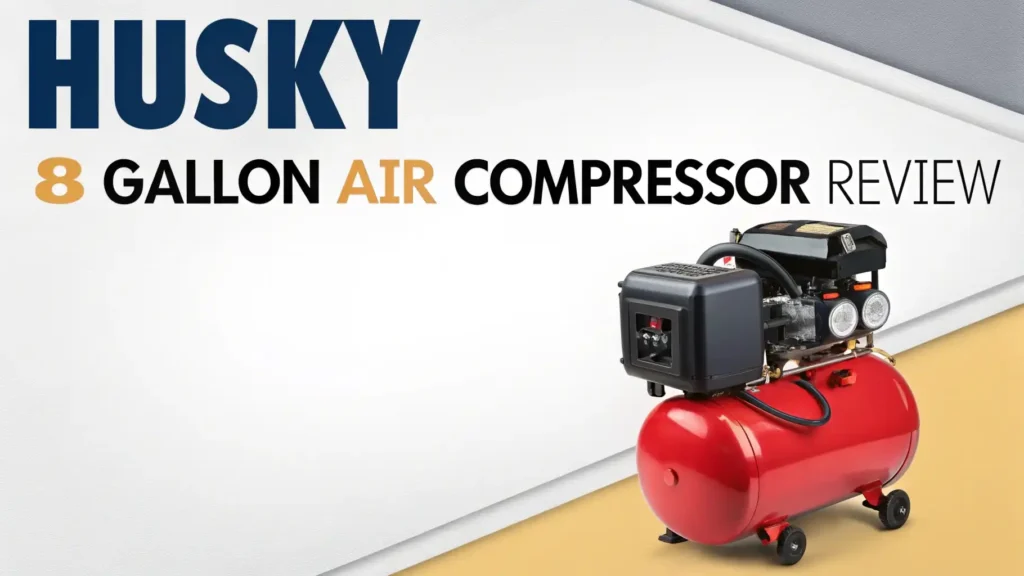
Husky 8 Gallon Air Compressor Review: Worth The Investment?
You need a reliable air compressor for your home workshop. You want something powerful enough to handle multiple tasks but affordable enough to fit your budget.
The Husky 8 gallon air compressor promises to deliver both power and value. But does it really live up to the hype?
This detailed review will help you decide if this popular compressor is the right choice for your needs.
Key Takeaways
- Perfect Size for Home Workshops: The 8 gallon tank provides enough air storage for most DIY projects without taking up too much space in your garage. You can easily move it around thanks to the rubber wheels and convenient handle.
- Oil-Free Motor Means Less Maintenance: The 1.8 HP oil-free motor requires minimal upkeep compared to oil-lubricated models. You won’t need to worry about checking oil levels or dealing with messy oil changes.
- Strong Performance for Light to Moderate Use: With a maximum pressure of 150 PSI and 3.7 CFM at 90 PSI, this compressor handles nail guns, tire inflation, brad nailers, and light spray painting jobs effectively.
- Budget-Friendly Price Point: Typically priced between $99 and $150, this compressor offers excellent value for homeowners who need reliable air power without breaking the bank.
- Some Users Report Quality Control Issues: While many customers love their units, some have experienced problems with pressure switches, premature failures, or units arriving with defects. Always test your compressor immediately after purchase.
Understanding the Husky 8 Gallon Air Compressor

- 8 Gallon Ultra Quiet Air Compressor: This portable air compressor features a lightweight...
- Fast and Efficient Inflation: Our oil-free air compressor utilizes a single tube and...
The Husky 8 gallon air compressor comes in a hotdog style tank configuration. This horizontal design offers better stability than vertical models. The compressor measures compact enough to fit in most garage corners. You can store it easily when not in use.
The unit features a 1.8 HP induction motor that powers the oil-free pump. This motor delivers consistent performance for years of service. The maximum tank pressure reaches 150 PSI, giving you plenty of power for various applications. The compressor provides 3.7 SCFM at 90 PSI, which means it can keep up with most pneumatic tools designed for home use.
Home Depot carries this model as their house brand. Husky products typically offer good quality at competitive prices. The company backs their compressors with solid warranties. You get peace of mind knowing a major retailer stands behind the product.
Power and Performance Specifications
Let’s talk about the real numbers that matter for your projects. The Husky 8 gallon compressor delivers 4.0 SCFM at 90 PSI according to some user reports. This air flow rate works well for brad nailers, finish nailers, and staple guns. You can run these tools continuously without waiting for the tank to refill constantly.
The 150 PSI maximum pressure gives you versatility. Many compressors max out at 125 PSI. Those extra 25 PSI can make a difference for certain applications. You get more stored energy in the tank. This means longer run times between compressor cycles.
The motor draws standard 120V household current. You don’t need any special electrical setup. Simply plug it into any standard outlet and start working. The 1.8 HP motor provides enough power for quick recovery times. The tank refills from empty to full in approximately 3 to 4 minutes based on user experiences.
Tank Design and Build Quality
The 8 gallon horizontal hotdog tank sits low to the ground. This design choice improves stability significantly. You won’t worry about the compressor tipping over during operation. The steel tank construction ensures durability and longevity.
Rubber wheels attach to one end of the tank. These wheels roll smoothly across concrete garage floors. The rubber material won’t scratch or damage your flooring. A fold-down handle on the opposite end makes transportation easy. You can wheel the compressor around your workspace with minimal effort.
The tank features a powder-coated finish that resists rust and corrosion. This protective coating helps the compressor withstand humid garage environments. Proper care will keep your investment looking good for many years.
Top 3 Alternatives for Husky 8 Gallon Air Compressor

- ULTRA QUIET PERFORMANCE: The California Air Tools Ultra Quiet & Oil-Free Air Compressor...
- POWERFUL OPERATION: Equipped with an oil-free Dual Piston Pump System, this ultra quiet...

- POWERFUL PERFORMANCE WITH EFFICIENT MOTOR: This 8 gallon ultra quiet air compressor is...
- LOW NOISE AND ENERGY-EFFICIENT: The 2HP motor operates with low noise levels, making it...

- 8 Gallon Air Compressor: Our 650W oil-free motor drives the compressor up to a speed of...
- Fast and Efficient Inflation: Our oil-free air compressor adopts tube and cylinder intake,...
Oil-Free Motor Technology
The oil-free pump design offers several advantages for home users. You eliminate all the maintenance tasks associated with oil-lubricated compressors. No more checking oil levels before each use. No more scheduling regular oil changes. No more disposing of dirty compressor oil.
Oil-free pumps run cleaner than their oil-lubricated counterparts. You won’t risk oil contamination in your air lines. This feature becomes especially important for painting applications. Even tiny amounts of oil can ruin a paint job.
However, oil-free motors do generate more noise during operation. The lack of oil means less sound dampening inside the pump mechanism. Most users report the Husky compressor runs at about 68 to 70 decibels. This noise level compares to a vacuum cleaner or dishwasher. It’s noticeable but not unbearably loud for occasional use.
The trade-off is longer motor life in many cases. Modern oil-free motors use advanced materials that resist wear effectively. These pumps can last just as long as oil-lubricated models when used within their design parameters.
Portability and Mobility Features
Portability matters when you work on different projects around your property. The Husky 8 gallon compressor weighs approximately 55 to 60 pounds when empty. This weight makes it manageable for most adults to lift and carry short distances.
The rubber wheels handle the heavy lifting for longer moves. You can easily roll the compressor from your garage to your driveway for tire inflation. The wheels work well on concrete, asphalt, and even gravel surfaces. The removable handle tucks away when not needed. This feature reduces the overall footprint when you store the compressor.
Some users mount their compressors on rolling platforms or carts. This modification provides even better mobility for larger workshops. The compact horizontal design makes mounting easy. You gain extra storage space underneath for air hoses and accessories.
Noise Levels and Quiet Operation
Air compressor noise ranks as one of the top complaints from users. The Husky 8 gallon model produces moderate noise levels during operation. Most reviews place it around 68 to 70 decibels when running. This measurement puts it in the middle range for compressors this size.
You can hold a conversation while the compressor runs. The noise won’t drive you crazy during extended use sessions. However, you might want hearing protection if you run the compressor continuously for hours.
The motor cycles on and off based on tank pressure. Once the tank reaches maximum pressure, the motor shuts off completely. You work in silence until the pressure drops enough to trigger another cycle. This intermittent operation pattern reduces overall noise exposure significantly.
Some users report that newer models run quieter than older versions. Husky has apparently made improvements to reduce vibration and noise. If quiet operation is crucial for your situation, consider looking at dedicated quiet compressors. The California Air Tools models run around 60 decibels, noticeably quieter than the Husky.
Applications and Best Use Cases
This compressor excels at specific tasks while struggling with others. Understanding its sweet spot helps you set realistic expectations. The Husky 8 gallon works perfectly for:
Nail Gun Operations: Brad nailers, finish nailers, and crown staplers all run beautifully on this compressor. The 3.7 SCFM output keeps up with rapid nailing sequences. You can complete entire trim projects without annoying delays.
Tire Inflation: Fill car, truck, and bicycle tires quickly and easily. The 150 PSI maximum pressure handles even high-pressure road bike tires. The portable design lets you move the compressor to any vehicle.
Light Spray Painting: Small spray painting projects work well with proper technique. You can paint furniture, cabinets, or small craft projects. Just don’t expect professional results on large automotive painting jobs.
Air Dusting and Cleaning: Blow out dust from power tools, computers, or garage corners. The strong air pressure makes cleaning quick and efficient.
Inflatable Items: Fill pool toys, air mattresses, sports balls, and other inflatables rapidly. Your kids will appreciate how quickly you can set up the pool.
Limitations and Not Recommended Uses
Every tool has its limits. The Husky 8 gallon compressor isn’t suitable for certain applications. Avoid using this compressor for:
Continuous Operation Tools: Impact wrenches, die grinders, and sanders require constant high air flow. The 8 gallon tank empties too quickly. The motor will cycle constantly, potentially leading to overheating.
Heavy-Duty Paint Spraying: Large automotive paint jobs or whole-house painting projects demand more air volume. You’ll spend more time waiting than painting. Consider a larger compressor for these tasks.
Professional Contractor Work: Daily intensive use will wear out this compressor faster. Professional contractors need heavier-duty equipment designed for continuous operation. This model suits occasional home use much better.
Plasma Cutting: Most plasma cutters need consistent high-volume air flow. The Husky 8 gallon can’t maintain the required CFM long enough for effective cutting operations.
Assembly and Setup Process
Most users report simple assembly that takes 15 to 30 minutes. The compressor arrives mostly assembled from the factory. You typically need to attach the wheels, handle, and pressure regulator assembly. Basic hand tools handle everything.
The instruction manual provides clear step-by-step directions. Even users with limited mechanical experience complete setup successfully. Some users recommend having a second person help with positioning the compressor during wheel installation. The awkward shape makes solo assembly slightly challenging.
After mechanical assembly, you need to prepare the compressor for first use. Run the compressor without any tools attached for about 5 to 10 minutes. This break-in period allows internal components to seat properly. The motor may smell slightly during initial use. This odor is normal and disappears after the first few hours of operation.
Check all fittings for air leaks after assembly. Apply soapy water to connections and look for bubbles. Tighten any connections that show leaks. This preventive step saves frustration later.
Pressure Regulation and Control Features
The built-in pressure regulator lets you adjust output pressure precisely. Most pneumatic tools require specific operating pressures. Brad nailers might need 90 PSI while tire inflation might need 35 PSI. The easy-to-read pressure gauge shows both tank pressure and regulated output pressure.
Turn the regulator knob clockwise to increase pressure. Turn it counterclockwise to decrease pressure. The adjustment responds smoothly and precisely. You can dial in exactly the pressure your current tool requires.
The quick-connect coupler makes tool changes fast and easy. Most pneumatic tools use standard quarter-inch fittings. Simply push the fitting into the coupler and you’re ready to work. Pull the collar back to release tools quickly.
Some users upgrade to dual quick-connect manifolds. This modification allows two tools to remain connected simultaneously. You can switch between tools without constant connecting and disconnecting.
Maintenance Requirements and Care Tips
The oil-free design dramatically reduces maintenance needs. However, you still need to perform basic care tasks. Regular maintenance extends compressor life significantly.
Drain the tank after every use. Compressed air contains moisture that condenses inside the tank. Open the drain valve and let water run out completely. This simple step prevents rust and corrosion inside the tank.
Check the intake filter monthly. A clogged intake filter reduces efficiency and strains the motor. Remove the filter, wash it with soap and water, and let it dry completely before reinstalling.
Inspect fittings and hoses regularly. Look for cracks, wear, or damage. Replace worn parts immediately. Air leaks waste energy and reduce performance.
Keep the compressor clean. Wipe down the exterior to remove dust and debris. Keep the motor cooling fins clear of obstructions. Proper airflow prevents overheating.
Store in a dry location. Protect your compressor from weather and excessive moisture. A dry garage or shed provides ideal storage conditions.
Real User Experiences and Customer Reviews
User reviews paint a mixed but generally positive picture. Many customers express satisfaction with their purchase. They appreciate the value for money and adequate performance for home projects. Several reviewers specifically mention using their Husky compressors for multiple years without problems.
Positive reviews frequently highlight the quick fill time and sufficient power for nail guns. Users love the portability for moving around job sites. The price point receives consistent praise. Many reviewers state they would buy the same compressor again.
However, some users report frustrating experiences. Quality control issues appear in multiple reviews. Some units arrived with defective pressure switches. Others failed within the first year of light use. A few customers received units with flat tires or missing parts.
Several reviewers mention the compressor overheating during extended use. The duty cycle isn’t suitable for continuous operation. Users who tried to run impact wrenches or sanders experienced shutdowns. This limitation frustrates those who don’t understand the compressor’s design parameters.
The noise level receives mixed feedback. Some users find it acceptably quiet. Others consider it too loud for residential areas. Your noise tolerance will determine whether this aspect bothers you.
Comparing Value Against Competitors
How does the Husky stack up against similar compressors? The California Air Tools 8010 offers quieter operation at 60 decibels. However, it costs significantly more, usually around $205. You pay a premium for the reduced noise.
Generic 8 gallon compressors on Amazon often cost $170 to $180. These units offer similar specs to the Husky. Build quality and reliability remain question marks with lesser-known brands. The Husky benefits from Home Depot’s customer service and return policy.
Craftsman offers comparable 6 gallon pancake compressors in the same price range. The pancake design takes up less floor space. However, the smaller tank means more frequent motor cycling. The Husky’s larger tank provides better performance for air-hungry tools.
Porter Cable discontinued many of their consumer compressor lines. Finding parts and support for older Porter Cable units has become difficult. The Husky enjoys active production and readily available parts.
Warranty Coverage and Customer Support
Home Depot backs the Husky air compressor with a limited warranty. The standard warranty covers defects in materials and workmanship. Coverage typically lasts one year from the purchase date. Keep your receipt to validate warranty claims.
Some users report positive experiences with Home Depot’s customer service. The store often exchanges defective units without hassle during the warranty period. This convenient process beats dealing with mail-in warranty claims.
However, warranty coverage has limitations. Normal wear items like gaskets and valves aren’t covered. Damage from misuse or lack of maintenance voids the warranty. Always follow the operating instructions and maintenance schedule.
Extended warranty options may be available at purchase. Evaluate these carefully. The relatively low cost of the compressor might not justify spending much on extended coverage.
Price Analysis and Where to Buy
Home Depot serves as the primary retailer for Husky compressors. Regular pricing hovers around $129 to $150 for the 8 gallon model. Watch for sales events when prices drop to $99 or less. Black Friday and spring tool sales often feature significant discounts.
You might find used Husky compressors on Craigsight or Facebook Marketplace. Exercise caution when buying used. Inspect the unit thoroughly and test it before purchasing. Ask about the compressor’s age and usage history. A well-maintained unit can provide good value. However, worn-out compressors bring nothing but headaches.
Some online retailers stock Husky products, but selection is limited. Amazon occasionally lists Husky compressors, though availability varies. Buying from Home Depot ensures authentic products and simplifies returns if needed.
Consider the total cost including accessories. You’ll likely need an air hose, quick-connect fittings, and various tool adapters. Budget an extra $30 to $50 for these essential accessories.
Tips for Getting the Most From Your Husky Compressor
Maximize your investment with these practical tips. Use an inline water separator if you do any painting or finishing work. This inexpensive accessory removes moisture from the air stream. Your paint jobs will turn out better.
Invest in a quality air hose. Cheap hoses kink easily and restrict air flow. A good rubber or hybrid hose lasts longer and performs better. Choose appropriate hose diameter for your tools. Quarter-inch hoses work for most applications.
Learn to match tool requirements to compressor capabilities. Check your pneumatic tools’ CFM requirements. Choose tools that work within the compressor’s 3.7 CFM output. This prevents frustration and equipment strain.
Let the compressor rest during heavy use. If you notice the motor running excessively hot, stop and let it cool down. This practice prevents damage and extends motor life. The duty cycle isn’t designed for continuous operation.
Add a secondary tank if you need more air storage. Some users connect an additional air tank to increase capacity. This modification extends run time for air-hungry tools. Search online for instructions on this popular upgrade.
Common Problems and Troubleshooting Solutions
Even reliable compressors encounter occasional issues. Knowing how to troubleshoot saves time and money. If the compressor won’t start, check the power outlet first. Try a different outlet or circuit. Verify the pressure switch isn’t already engaged from maximum pressure.
Slow tank filling indicates possible air leaks or valve problems. Check all fittings with soapy water. Listen for hissing sounds. Replace damaged check valves if the tank loses pressure when shut off.
Excessive motor cycling means your tool demands more air than the compressor supplies. Either use smaller tools or upgrade to a larger compressor. Adding a secondary tank can help this situation.
Moisture in air lines is normal but manageable. Drain the tank regularly and install water separators. Consider adding an air dryer for critical applications.
Unusual noises might signal loose parts or internal damage. Shut down immediately and inspect the compressor. Tighten all mounting bolts and check for obvious problems. Unusual mechanical sounds warrant professional inspection.
Environmental Considerations and Energy Efficiency
The Husky 8 gallon compressor draws approximately 12 to 15 amps during operation. This electrical draw translates to about 1.5 kilowatts. At average electricity rates, running the compressor costs roughly $0.15 to $0.20 per hour. Your actual costs depend on local utility rates and usage patterns.
The oil-free design eliminates disposal concerns for used oil. You won’t need to deal with hazardous waste collection. This environmental benefit adds convenience for home users.
Air leaks waste energy significantly. A small leak can cause the compressor to cycle frequently. This unnecessary operation wastes electricity and wears out the motor faster. Fix leaks promptly to improve efficiency.
Consider the compressor’s duty cycle when planning projects. The motor isn’t designed to run continuously. Proper use minimizes energy consumption and maximizes equipment life. Plan breaks between high-demand tasks.
Safety Considerations and Best Practices
Air compressors pose several safety risks when used improperly. Always wear safety glasses when working with compressed air. Air pressure can propel debris at high velocities. Protect your eyes from potential injuries.
Never exceed tool-rated pressures. Check each pneumatic tool’s maximum pressure rating. Set your regulator appropriately. Excessive pressure can damage tools or cause them to malfunction dangerously.
Release pressure before performing maintenance. Always drain the tank and bleed air lines before working on the compressor. Pressurized components can cause serious injuries.
Keep the compressor on stable ground. The hotdog design resists tipping but can still roll on uneven surfaces. Block the wheels on slopes or unstable areas.
Provide adequate ventilation. Compressor motors generate heat and consume oxygen. Never operate in enclosed spaces without proper airflow. Carbon monoxide isn’t a concern with electric motors, but overheating can cause fires.
Keep children and pets away from the operating compressor. The noise and moving parts pose risks to curious youngsters. Store the compressor securely when not in use.
FAQs
Is the Husky 8 gallon air compressor good for painting cars?
The Husky 8 gallon compressor can handle small touch-up painting jobs or painting individual panels. However, it’s not ideal for complete automotive paint jobs. The limited tank size and CFM output mean you’ll spend considerable time waiting for tank refills. Professional auto painting requires compressors with at least 20 gallon tanks and 10+ CFM output. If you plan to paint entire vehicles, invest in a larger compressor.
How long does the Husky 8 gallon air compressor last?
With proper maintenance and appropriate use, the Husky 8 gallon compressor typically lasts 5 to 10 years. Users who drain the tank regularly, maintain clean filters, and avoid overworking the unit report longest lifespans. Heavy use or neglected maintenance can shorten life to 2 to 3 years. The oil-free pump design eliminates some maintenance but requires staying within design parameters. Don’t expect the same longevity as premium industrial compressors that cost three times as much.
Can I run an impact wrench with the Husky 8 gallon compressor?
Most impact wrenches require 5 to 8 CFM at 90 PSI for effective operation. The Husky’s 3.7 CFM output can’t sustain continuous impact wrench use. You might manage a few bolts before the tank empties. The motor will cycle constantly trying to keep up. This situation stresses the compressor and provides frustrating performance. Consider the Husky for occasional light-duty fastener work only. Serious automotive work demands a larger compressor with higher CFM ratings.
What size air hose should I use with this compressor?
A quarter-inch diameter air hose works well for most applications with the Husky 8 gallon compressor. Choose lengths between 25 and 50 feet for good balance between reach and pressure drop. Longer hoses reduce delivered pressure at the tool. For maximum performance with air-hungry tools, consider three-eighths inch diameter hoses. These larger hoses minimize pressure loss. Always use quality rubber or hybrid hoses rather than cheap vinyl ones. Good hoses resist kinking and last much longer.
Does the Husky 8 gallon compressor need oil?
No, the Husky 8 gallon compressor features an oil-free pump design. You never need to add or change oil in the pump mechanism. This design simplifies maintenance significantly. However, some users confuse pump oil with the need to occasionally lubricate external moving parts. The wheels and handle might benefit from occasional light lubrication to prevent squeaking. The actual air pump requires zero oil maintenance. Just drain the moisture from the tank and keep the air filter clean.
How loud is the Husky 8 gallon air compressor?
The Husky 8 gallon compressor operates at approximately 68 to 70 decibels during normal use. This noise level compares to a household vacuum cleaner or dishwasher. You can hold conversations while it runs, though you might need to raise your voice slightly. The noise won’t disturb neighbors in typical suburban settings. However, if you work in attached garages or noise-sensitive environments, consider quieter models. California Air Tools compressors run around 60 decibels, noticeably quieter. Most users find the Husky’s noise level acceptable for occasional home use.

Last update on 2026-04-11 / Affiliate links / Images from Amazon Product Advertising API