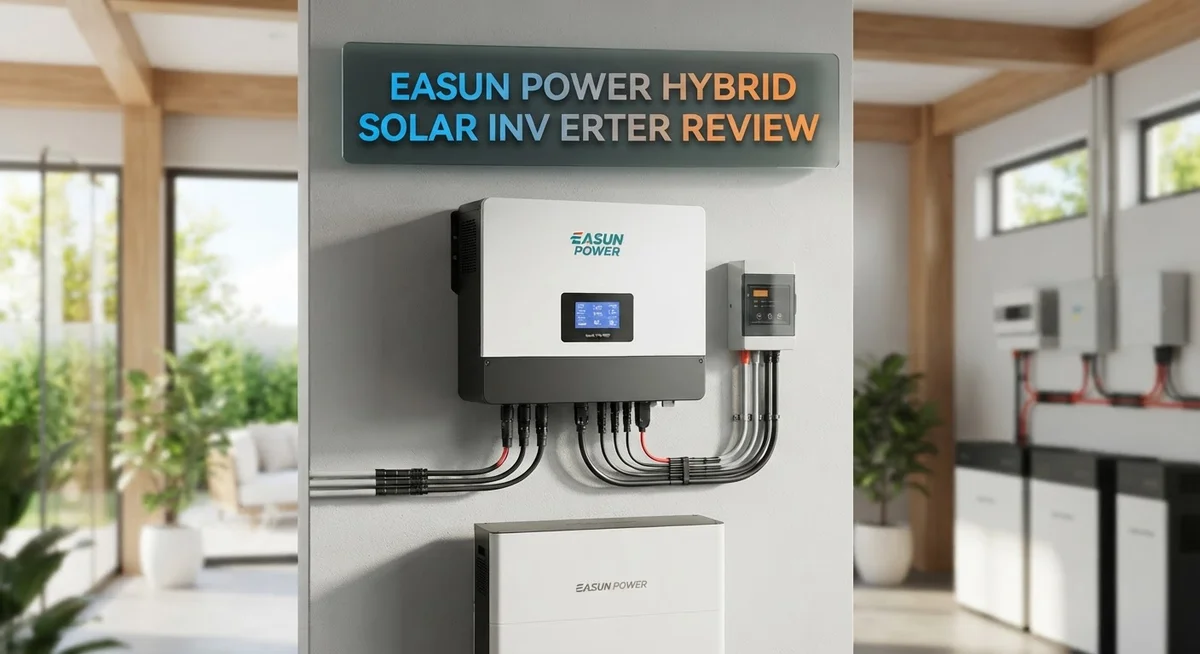
Easun Power Hybrid Solar Inverter Review: Live Up To The Hype?
Solar power systems need reliable inverters. The Easun Power Hybrid Solar Inverter promises to combine three functions in one unit. It works as an inverter, charger, and solar controller together.
This range spans 3KW to 11KW models. Each unit runs on a 48V DC system. It includes an MPPT solar charge controller rated between 110A and 150A.
But does this inverter perform as well as it promises? User reports raise concerns about reliability and build quality. Some buyers report early failures and error codes.
This review looks at every angle. We cover the specs, real pros, and honest cons. You will learn if this inverter fits your solar setup.
We also compare it to top competitors like Victron Multi RS. By the end, you will know if Easun Power deserves a spot in your system.
In a Nutshell
Here is the quick summary you need before diving deeper into this inverter.
- All-in-one build: This unit combines an inverter, charger, and MPPT controller in one box. That saves space in tight setups.
- Smart monitoring: The built-in WiFi lets you check system stats from your phone. The LCD display adds a simple on-site view too.
- Safety features: An integrated BMS protects your battery bank. This helps prevent overcharging and short circuits.
- Battery warranty: Easun backs its batteries with a 10-year warranty. This shows some confidence in that part of the system.
- Real concerns exist: Some users report early failures like error F09 or motherboard issues within days. Customer support response has also drawn complaints.
- Power draw matters: This inverter uses more standby power than rivals like Victron. That gap can add up over a full year of use.
- Trust score is low: Trustpilot reviews for Easun currently sit at 1 out of 5 stars. That number alone deserves your attention before buying.
System Specifications and Power Output
The Easun Power Hybrid Solar Inverter operates on a 48V DC system that powers multiple functions from a single unit. This voltage standard is common in modern off-grid setups and ensures compatibility with most battery banks on the market today.
The inverter comes in models ranging from 3KW to 11KW. The 6.2KW and 11KW versions are the most documented options for residential and small commercial use. Each model handles different load requirements, so you can match your system size to your actual energy needs.
Peak output reaches up to 6,500W, which means the inverter can handle brief power surges from appliances like air conditioners or water pumps. This surge capacity matters because real-world devices often draw more power when starting up than during normal operation.
The built-in MPPT solar charge controller features 110A to 150A capacity depending on the model. This component tracks the maximum power point of your solar array throughout the day. Higher amperage means faster charging from your panels, especially during peak sunlight hours.
Monitoring happens through multiple channels. A local LCD display shows real-time stats at your installation site. WiFi connectivity lets you check system performance remotely using your smartphone. RS485 communication enables integration with other devices or systems if you need advanced automation.
Safety relies on an integrated Battery Management System (BMS). This system monitors voltage, current, and temperature across your battery bank. It automatically disconnects or limits power if any dangerous condition develops.
The off-grid capability is a major strength. This inverter works independently from the utility grid, making it suitable for remote cabins, boats, RVs, and island properties. You don’t need grid connection to operate the system effectively.
However, real-world reliability concerns have emerged. Some users report component failures like error F09 codes or motherboard damage occurring within the first week of operation. Internal component quality appears lower than premium competitors. Standby power consumption also runs higher than similar models, which affects daily energy efficiency in systems that run 24/7.

- 【Crystal-Clear Glass LCD with Intuitive Control】Features a premium 6.25-inch tempered...
- 【High-Efficiency 4000W Output & Ultra-Fast Solar Charging】 Delivers 4000W continuous...
Last update on 2026-10-16 / Affiliate links / Images from Amazon Product Advertising API
All-in-One Design and Integration
The Easun Power Hybrid Solar Inverter combines three essential functions into a single unit. You get an inverter, a charger, and an MPPT solar controller all working together. This all-in-one approach simplifies your system setup and reduces the number of separate components you need to purchase and install.
Integration benefits are clear. A single device means fewer connection points where problems can occur. Your wiring becomes simpler. Your installation time drops. You also save valuable space in your equipment room or RV cabinet, which matters when every inch counts.
The inverter handles 48V DC power from your battery bank. It converts this to 120V or 240V AC power for your home or vehicle. Meanwhile, the built-in MPPT controller captures solar energy and sends it directly to charge your batteries. The charger accepts power from generators or grid connections when needed. All three functions communicate through one system, so they work as a team rather than fighting each other.
Monitoring and control happen through multiple channels. The LCD display on the front gives you instant readings. The WiFi connection lets you check your system from anywhere using your phone. RS485 communication allows connection to external devices and systems. This flexibility helps you expand your setup later without replacing the core inverter.
The integrated Battery Management System adds another layer of protection. It watches voltage, current, and temperature constantly. If something goes wrong, the BMS acts fast to prevent damage. This protection matters because batteries are expensive to replace.
However, real-world performance tells a different story for some users. Reports of early failures like error F09 codes and motherboard damage within days raise serious questions. Low-quality internal components have been noted by owners. These issues suggest the all-in-one design may sacrifice durability for convenience.
The all-in-one approach works well on paper. It simplifies your system and saves space. Yet the reliability concerns mean you should research current user experiences before committing to this inverter for your setup.
Monitoring, Control, and User Interface
The Easun Power Hybrid Solar Inverter gives you several ways to monitor and control your system. The built-in LCD display shows real-time data directly on the unit itself. You see voltage, current, power output, and battery status without needing extra equipment.
WiFi connectivity is where things get interesting. The inverter connects to your phone through a mobile app. You check system performance from anywhere, anytime. This remote access helps you spot problems early and adjust settings on the fly.
The app interface displays key metrics like solar input, battery charge level, and inverter load. Alerts notify you when something needs attention. You get notifications for low battery conditions, high temperatures, or system errors. This keeps you informed without constant manual checking.
RS485 communication is built in for advanced users. You can integrate the inverter with other devices and monitoring systems. This makes it suitable for larger installations that need centralized control.
The control options let you switch between different operating modes. You can prioritize battery charging, solar use, or grid power depending on your needs. Manual adjustments happen through the app or the physical display.
However, user reports suggest some concerns here. The LCD display quality varies across units. Some owners report dim screens or display failures. The app occasionally experiences connectivity drops, especially in areas with weak WiFi signals.
Customer support for troubleshooting the interface has been inconsistent. Many users struggle to find clear documentation on advanced features. The RS485 setup requires technical knowledge, and support resources are limited.
Response times for system alerts can be slow. Users report delays between an issue occurring and receiving notification. This matters when you need quick responses to battery problems or overload conditions.
The interface works well for basic monitoring tasks. Daily users appreciate the simplicity of the app. For complex system management or remote troubleshooting, the limitations become more apparent. Overall, the monitoring system serves its purpose but lacks the polish and reliability you’d find in premium alternatives.
Top 3 Alternatives
Growatt SPF ES Hybrid

- REEF SAFE SUNSCREEN 23.5% NON-NANO ZINC OXIDE - Minimal white cast, rubs in easy, faster...
- SPF 50 BROAD SPECTRUM PROTECTION - All natural mineral sunscreen provides broad-spectrum...
Last update on 2026-10-16 / Affiliate links / Images from Amazon Product Advertising API
The Growatt SPF ES Hybrid brings flexible energy management to your home. This inverter works with both lithium and lead-acid batteries. You get real-time monitoring through a mobile app that shows your energy flow instantly.
The system handles grid-tied and off-grid modes seamlessly. It supports high voltage battery systems, which means fewer cables and simpler installation. The built-in WiFi lets you check performance from anywhere.
Victron MultiPlus Inverter

- POWER ASSIST: With the unique Power Assist feature the MultiPlus-II solar inverter will...
- POWER WITHOUT INTERRUPTION: In the event of a grid failure, or when shore or generator...
Last update on 2026-10-16 / Affiliate links / Images from Amazon Product Advertising API
Victron builds inverters that last for decades. The MultiPlus series combines inverting, charging, and AC transfer in one unit. It switches between grid power and battery backup instantly during outages.
This inverter works with various battery types and voltage levels. The system includes advanced monitoring through their Color Control panel. You can stack multiple units for higher power capacity. Victron’s engineering focuses on reliability in demanding environments.
SMA Sunny Boy Storage

- Ultimate flexibility: 200% DC/AC design capability PV | Hybrid and AC coupling in one...
- Easy installation: Smaller and lighter, eases mounting | Quick commissioning via SMA...
Last update on 2026-10-16 / Affiliate links / Images from Amazon Product Advertising API
SMA’s Sunny Boy Storage offers intelligent battery integration with solar panels. This inverter prioritizes self-consumption, meaning you use more of your generated power. The system learns your energy patterns and optimizes charging automatically.
The inverter supports rapid shutdown for safety compliance. Its compact design fits easily in tight spaces. SMA provides excellent customer support and regular software updates. The Sunny Boy Storage works with multiple battery brands and capacities.
Each alternative brings different strengths. Growatt emphasizes affordability and flexibility. Victron focuses on durability and off-grid capability. SMA prioritizes smart energy optimization. Your choice depends on your specific needs and existing equipment.
Reliability and Component Quality
The Easun Power Hybrid Solar Inverter presents a paradox. On paper, the component selection looks solid. You get an MPPT solar charge controller rated 110A to 150A, an integrated Battery Management System, and a 48V DC architecture. These elements suggest durability and careful engineering.
Reality tells a different story. User reports reveal early component failures within days of installation. Error F09 codes appear unexpectedly. Motherboards fail after just one week of operation. This pattern suggests quality control issues during manufacturing or assembly.
The internal components themselves have drawn criticism. Users who opened their units found low-grade parts that don’t match the unit’s specifications. Capacitors, connectors, and circuit boards show signs of cost-cutting measures. These aren’t premium components you’d expect at this power level.
The BMS deserves mention here. While integration sounds protective, some users report the system doesn’t catch failures early enough. The BMS should prevent damage, yet failures still occur rapidly. This raises questions about whether the protective systems work as designed.
Standby power consumption also reveals something about component efficiency. The Easun draws significantly more power during idle periods compared to competitors like Victron Multi RS. This gap suggests less efficient power management circuitry. Over time, this adds up to wasted energy and higher operating costs.
The warranty period shows confidence in theory. Ten years on batteries sounds reassuring. However, warranty claims become difficult when customer support responds slowly to problems. Users struggling with early failures report long wait times and unhelpful responses.
The all-in-one design creates another reliability concern. When one component fails, the entire system stops. You lose inverting, charging, and solar control simultaneously. A modular system would let you swap individual parts. With Easun, a single motherboard failure means the whole unit is down.
Component quality and reliability don’t match the specifications sheet. The unit functions initially, but early failures plague many users. The protective systems exist but don’t prevent problems effectively. If you choose this inverter, understand that real-world durability may fall short of expectations.
Efficiency and Operating Costs
Efficiency matters when you run solar power systems. The Easun Power Hybrid Solar Inverter claims strong efficiency ratings on paper, but real-world performance tells a different story.
The MPPT solar charge controller operates at 110A to 150A depending on your model. This should capture more solar energy than older PWM controllers. The peak output reaches up to 6,500W, which sounds impressive for a compact unit. However, standby power consumption reveals a hidden cost.
When your system sits idle, the inverter still draws power continuously. Users report significantly higher standby consumption compared to competitors like the Victron Multi RS. Over a full day, this difference adds up. A 40W gap might seem small, but it costs you real energy daily. That energy comes straight from your battery bank when the sun isn’t shining.
Operating costs extend beyond just electricity use. Reliability directly impacts your wallet. Early failures force expensive repairs or replacements. Users have reported error F09 messages and motherboard damage within just one week of operation. When your system fails, you lose power generation entirely. Off-grid users face serious consequences during cloudy periods or at night.
The integrated Battery Management System aims to protect your batteries and inverter. Yet component quality issues undermine this protection. Low-quality internal parts wear faster and fail sooner. This means higher replacement costs over time.
WiFi monitoring helps you track efficiency, but slow response times to system alerts create problems. You might not catch issues before they cause damage. Delayed notifications mean delayed repairs.
The real operating cost includes both electricity consumption and system reliability. A unit that consumes slightly more power might still cost less overall if it runs reliably for years. Conversely, an efficient inverter that fails frequently becomes expensive fast.
For off-grid systems, efficiency matters even more. Every watt counts when you depend on stored battery energy. Poor standby performance drains batteries unnecessarily. Combined with reported reliability concerns, the true operating costs may exceed what the specifications suggest.
Pros and Cons
Pros
- All-in-one design combines inverter, charger, and solar controller in a single unit
- WiFi monitoring app lets you track solar input, battery charge, and system load from your phone
- Works well for off-grid applications like RVs, boats, and remote cabins
- MPPT solar charge controller handles 110A to 150A depending on your model size
- 10-year warranty on battery components shows manufacturer confidence
Cons
- Early failures reported within the first week, including error F09 codes and motherboard damage
- Internal components lack quality and durability compared to industry standards
- Standby power consumption runs higher than competitors, costing you more energy when idle
- Customer support response times are slow, leaving you without help when system alerts appear
Who Should Buy It
The Easun Power Hybrid Solar Inverter works best for specific user groups who understand its limitations and can work within them.
Off-grid homeowners benefit most from this unit. You get an all-in-one system that combines inverter, charger, and solar controller. This simplicity appeals to people building remote cabins or properties far from the grid. The 48V DC architecture handles moderate power loads reliably during normal operation.
RV and boat owners find real value here. The compact design fits tight spaces. WiFi monitoring lets you check battery levels and solar input from anywhere in your vehicle. You can track system performance without climbing into engine compartments or storage areas.
DIY enthusiasts with technical skills should consider this option. You need hands-on knowledge to troubleshoot problems quickly. Early failures happen within days of installation. Poor customer support means you cannot rely on help from the company. If you enjoy solving technical issues yourself, this becomes manageable. If you need responsive support, look elsewhere.
Budget conscious installers who prioritize initial affordability over long-term reliability might accept the tradeoffs. You understand that higher standby power consumption adds to operating costs over time. You accept that component quality varies from the specifications sheet.
Users who accept calculated risk work well with this inverter. You recognize that reliability issues exist. You plan for potential failures. You keep spare parts on hand. You have backup power solutions ready.
People with smaller power needs under 6.5KW peak output see better performance. The system handles modest loads more consistently than pushing it to maximum capacity.
Who should avoid this unit? Anyone needing reliable, hands-off operation should choose premium alternatives. Grid-tied systems work better with specialized grid-tie inverters. Users in remote areas without technical skills need equipment they can trust immediately. Businesses requiring uptime guarantees cannot depend on this system.
The Easun Power works for prepared, technically skilled people. You must accept ongoing maintenance and potential early failures. You need patience with troubleshooting. You value simplicity and all-in-one convenience over premium reliability.
Final Verdict
The Easun Power Hybrid Solar Inverter offers a mixed picture. It packs strong features into one unit. But real world performance tells a different story.
Trustpilot reviews show a 1 star rating. This signals serious trust issues among buyers. You should factor this into your decision.
The gap between specs and real world use matters most here. On paper, this inverter looks impressive. In practice, many users face early breakdowns and slow support responses.
This inverter suits a narrow group of buyers. People who enjoy fixing things themselves may find it workable. Those who need guaranteed uptime should look elsewhere.
Compare it to the Victron Multi RS Solar. Victron costs more but delivers better reliability and lower standby draw. For critical off-grid setups, that difference can outweigh other factors.
The Aurora grid-tied option serves a different purpose entirely. It fits grid-connected homes rather than fully off-grid setups. Your project type should guide which option fits best.
Think about your risk tolerance before buying. If a failure means lost power for days, this unit may not fit your needs. If you can troubleshoot and wait for parts, it might work fine.
Weigh the all-in-one convenience against the support and quality concerns. Both sides carry real weight here. Your specific situation decides which side wins.
This product works best as a calculated choice, not a default pick. Read user reports carefully before committing. Check current owner experiences on forums and review sites.
For most buyers, a proven premium brand offers more peace of mind long term. For confident DIY users with off-grid setups, this inverter still holds appeal. Choose based on your comfort with risk and your technical skills.
Frequently Asked Questions
Does the Easun Power work with my existing solar panels?
Yes, the Easun Power connects to most standard solar panels. The MPPT charge controller handles 110A to 150A depending on your model size. This means it adapts well to different panel configurations. You’ll need to check your system voltage matches the 48V DC requirement. The inverter accepts both PWM and MPPT inputs, so older panels work fine too.
What happens if the unit fails?
Early failure reports exist within the first week of operation. Users have documented error F09 codes and motherboard damage. Customer support response times are slow, which creates frustration during outages. The 10-year warranty covers battery components, but repairs for the inverter itself take time. Keep this risk in mind before installation, especially if downtime affects your daily life.
Can I monitor it from my phone?
Yes, the built-in WiFi lets you check performance on your mobile device. You see real-time data, battery levels, and solar generation instantly. The LCD display also shows information on the unit itself. However, some users report occasional connection drops. The RS485 communication port offers a wired backup if WiFi fails.
Is this better than Victron or Aurora?
The Easun Power takes a different approach. It combines inverter, charger, and controller in one box. Victron Multi RS Solar offers superior reliability and lower standby power consumption. Aurora focuses on grid-tied systems, not off-grid use. Choose based on your setup type and how much risk you’ll accept. The Easun fits specific needs like RVs and remote cabins where all-in-one design matters most.