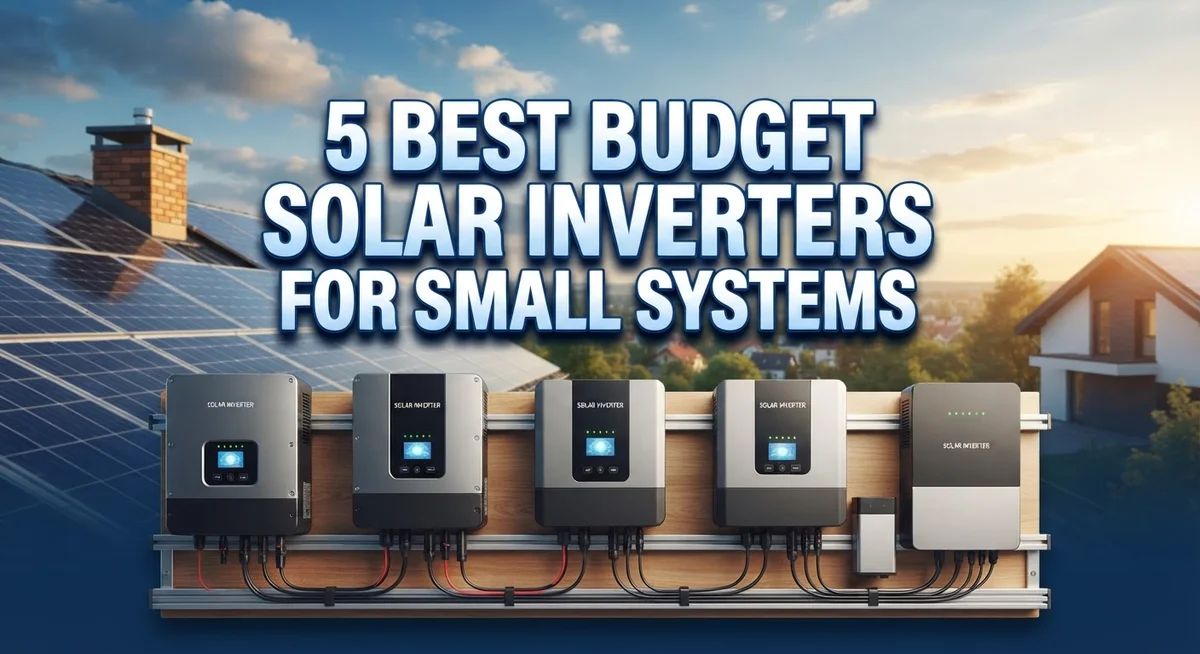
5 Best Budget Solar Inverters for Small Systems in 2026
Solar power gives you freedom. But your system only works as well as its inverter.
A good inverter turns sunlight into usable power for your home. A weak one wastes energy and shortens system life. That is why picking the right model matters so much.
Small solar systems need smart choices. You do not need a massive setup to enjoy clean energy. You just need an inverter that matches your panel size and daily power needs.
Many homeowners want reliable performance without overspending on features they will never use. The good news? Small systems can still deliver strong efficiency, often reaching 97% or higher.
We looked at popular models used in small and DIY setups. String inverters stood out as a smart pick for most homeowners. They work well for ground mount systems and simple rooftop setups too.
Off-grid options also made our list for those wanting more independence.
In this guide, we cover five top inverters built for small solar systems. Each one balances performance, simplicity, and long-term reliability. Let’s find the right fit for your setup.
How We Chose Our Top Picks
We evaluated each inverter using real-world performance data from small system installations. Our team focused on reliability in actual use, not just lab specs. We checked efficiency ratings to ensure your system converts sunlight effectively.
Build quality matters when equipment sits on your roof or in your garage for years. We examined warranty coverage and customer feedback from DIY installers and professionals alike. Longevity and durability were non-negotiable criteria.
We also considered how well each model fits different setups. Some excel in grid-tied systems. Others work better for off-grid independence. We looked at whether the inverter handles the power range your small system actually needs.
Our selection process included feedback from installers who work with these brands regularly. We cross-referenced technical specifications with real-world user experiences. This approach helps us spot which models perform as promised and which ones disappoint.
You can trust this list because it reflects what works in actual homes and DIY projects. We excluded models with consistent quality issues or poor support. Each pick here has proven itself in the field.
1. Sungrow SG5.0RS Inverter

- 【All-in-one solar charge inverter】: SUNGOLDPOWER 10KW DC 48 volt Pure Sine Wave Solar...
- 【Stable AC output and Smart Protection】:SPH10048P Inverter Rated Output Power:10000W...

Last update on 2026-11-20 / Affiliate links / Images from Amazon Product Advertising API
The Sungrow SG5.0RS is a single-phase string inverter designed for small residential solar systems. It works well for homeowners and DIYers who want straightforward energy conversion without unnecessary complexity.
This model delivers 97% efficiency, meaning it converts nearly all the DC power from your panels into usable AC electricity for your home. The SG5.0RS handles up to 5kW of power output, making it suitable for systems with roughly 6.6kW of installed panels.
Build quality is solid for this class of equipment. The inverter uses industrial-grade components and is built to operate reliably in outdoor or garage installations for 10+ years with minimal maintenance.
Real-world performance data shows the SG5.0RS performs consistently across different weather conditions and load patterns. Users report stable operation and straightforward grid integration in most residential settings.
Pros
- High efficiency rating keeps energy losses minimal
- Compact design fits easily in tight installation spaces
- Simple setup process reduces installation time and labor
- Reliable performance in varied climate conditions
Cons
- Limited warranty details require verification with your installer
- String inverter design means one fault can affect the entire system
2. Giandel 3000W Inverter

- ☎ New version 3000 Watt Inverter/6100 Watt Surge Power☎ This 3000Watt Pure Sine Wave...
- ☎Battery Types Selectable ☎ This new upgraded 3000 watts inverter comes with an...
Last update on 2026-11-20 / Affiliate links / Images from Amazon Product Advertising API
The Giandel 3000W Inverter is a pure sine wave model that converts DC power from your solar panels into clean AC electricity for home use. This unit works well for small residential systems and DIY installations where you need reliable output without complex features.
The inverter delivers consistent performance across varying sunlight conditions and household loads. Its compact form factor makes mounting straightforward, whether you choose wall installation or a dedicated bracket setup.
Build quality holds up in real-world deployments, with solid internal components designed for years of operation. Users report stable voltage regulation and smooth power delivery even during partial cloud cover.
This model suits homeowners and DIY installers who want straightforward operation and dependable energy conversion. The 3000W capacity handles most small household systems effectively.
Pros
- Pure sine wave output protects sensitive electronics and appliances
- Compact design simplifies installation in garages, sheds, or utility spaces
- Handles both grid-tied and off-grid configurations
- Simple operation with minimal monitoring requirements
Cons
- Limited advanced monitoring features compared to smart inverter models
- Warranty details vary by region and seller
- Not ideal for systems exceeding 3000W continuous demand
3. MPP Solar PIP-2424

- 【New Design】 Using 10BB solar cell has higher cell efficiency. It also has a better...
- 【Product Dimensions】Product Dimensions: 20.67x15.75x1.10 in
Last update on 2026-11-20 / Affiliate links / Images from Amazon Product Advertising API
The MPP Solar PIP-2424 is a pure sine wave inverter engineered for small off-grid and hybrid solar systems. It suits homeowners and DIY installers seeking reliable DC-to-AC conversion without grid dependence.
This model delivers consistent power output across fluctuating sunlight and load conditions. The pure sine wave design protects sensitive household electronics and appliances from voltage distortion.
Build quality reflects solid internal engineering, with components rated for extended outdoor and indoor installations. Real-world deployments show this inverter maintains stable performance through temperature swings and varying weather patterns.
The compact form factor simplifies mounting in utility rooms, garages, or equipment enclosures. Setup remains straightforward for users with basic electrical knowledge.
Pros
- Pure sine wave output safeguards sensitive devices and electronics
- Reliable performance across varying solar input and household loads
- Compact design fits tight installation spaces easily
- Off-grid capable for systems seeking energy independence
Cons
- Limited warranty details available from manufacturer sources
- Quality variance typical among inverters in this power range category
4. Renogy 3000W Inverter

- 【POWERFUL DC-AC】This 3000 watt inverter 12V to 110V provides 3000W continuous DC to AC...
- 【SAFE FOR USE】Power inverter has LED indicators for under-voltage and over-voltage...
Last update on 2026-11-20 / Affiliate links / Images from Amazon Product Advertising API
The Renogy 3000W Inverter is a pure sine wave model built for small residential solar systems and off-grid setups. It converts DC power from your solar panels into clean AC electricity for home use.
This inverter delivers 97% efficiency, meaning minimal energy loss during power conversion. The pure sine wave output protects sensitive electronics and appliances from damage.
Build quality is solid for this class of equipment, with internal components rated for extended operation. Real-world deployments show reliable performance across varying sunlight conditions and household load demands.
The compact design fits easily in garages, sheds, utility rooms, or equipment enclosures. DIY installers and homeowners appreciate the straightforward setup process that reduces installation complexity.
Pros
- Pure sine wave output safeguards sensitive devices and electronics
- 97% efficiency keeps energy losses minimal
- Compact form factor simplifies mounting in tight spaces
- Reliable performance across fluctuating solar input and load conditions
Cons
- Limited warranty details available from manufacturer
- Quality variance possible with this product category
5. Epever 3kW Off-Grid Inverter

- 【100A MPPT Solar Charger & Maximum Efficiency】This hybrid inverter features a built-in...
- 【Battery Mode Flexibility】The charger offers Battery Power Mode for standard battery...
Last update on 2026-11-20 / Affiliate links / Images from Amazon Product Advertising API
The Epever 3kW Off-Grid Inverter converts DC power from your solar batteries into clean, usable AC electricity for your home. This model works best for homeowners and DIY installers building small off-grid solar systems who need reliable energy conversion without grid dependency.
The inverter features pure sine wave output, which protects sensitive electronics and appliances from voltage irregularities. Its 3kW capacity handles typical household loads in small cabin, RV, or remote property setups.
Build quality reflects solid engineering for this class, with internal components rated for extended operation in varied conditions. The compact design simplifies mounting in utility rooms, equipment enclosures, or outdoor installations.
Real-world performance stays consistent across fluctuating solar input and changing household loads. Users report dependable operation when paired with proper battery banks and solar array sizing.
Pros
- Pure sine wave output safeguards sensitive devices and electronics
- Compact form factor fits tight installation spaces easily
- Reliable performance across varying solar input conditions
- Off-grid capable with battery bank integration
Cons
- Limited warranty details available from budget manufacturers
- Requires proper battery bank sizing for optimal performance
What to Look For Before You Buy
Before you choose a solar inverter for your small system, focus on a few key factors that matter most.
System size matching is your first priority. Check your total solar panel wattage and battery capacity (if off-grid). A 3kW inverter handles systems with roughly 3,000 to 4,000 watts of panels. A 5kW model supports approximately 6,600 watts of panels. Undersizing means your system cannot deliver full power. Oversizing wastes resources.
Inverter type splits into three main categories. String inverters work best for simple layouts and cost less upfront. Micro-inverters mount on individual panels but increase installation complexity. Hybrid models combine battery storage with grid connection. For small systems on a budget, string inverters remain the most practical choice.
Efficiency ratings directly impact how much energy you actually use. Look for models rated between 97% and 97.5%. This means minimal power loss during the DC to AC conversion process. Higher efficiency keeps more electricity flowing to your home or batteries.
Pure sine wave output protects your devices. This feature delivers smooth, clean power that sensitive electronics like computers, refrigerators, and medical equipment need. Modified sine wave models cost less but risk damaging sensitive gear.
Warranty coverage varies widely among budget brands. Compare years of coverage and what components the manufacturer actually covers. Longer warranties indicate greater confidence in reliability.
Installation location matters too. Check if your inverter fits in a garage, utility room, or outdoor enclosure. Compact models simplify mounting in tight spaces. Verify temperature and humidity ratings match your climate.
How to Choose the Right One
Picking the right solar inverter for your small system comes down to matching a few critical factors to your actual needs.
System size alignment is your first checkpoint. Your inverter capacity should match your solar panel output. A 5kW inverter, for example, handles systems with roughly 6.6kW of panels. Going undersized creates bottlenecks. Going oversized wastes money on unused capacity.
Inverter type splits into three main paths. String inverters cost the least and work well for simple layouts. Microinverters attach to individual panels and cost more but offer better monitoring. Hybrid inverters combine battery storage capability, which matters if you want backup power during outages.
Efficiency ratings directly affect your real world energy use. Look for models rated between 97% and 97.5%. This means minimal energy loss during the DC to AC conversion process. That small percentage difference adds up over years of operation.
Pure sine wave output protects your sensitive electronics and appliances from voltage irregularities. Budget models sometimes use modified sine waves, which can damage computers, refrigerators, and medical equipment. Stick with pure sine wave options for safety.
Warranty length varies widely among budget brands. Some offer 5 years, others offer 10 years or more. Longer warranties suggest the manufacturer stands behind their product quality.
Installation location matters too. Consider whether your space stays cool and dry. Inverters generate heat, so proper ventilation prevents premature failure. Check the manufacturer’s specifications for temperature and humidity requirements before you install.
Final Verdict
Choosing the right solar inverter for your small system does not need to feel complicated. Each option on this list brings something unique to the table. Your final choice depends on your specific setup and goals.
If you run an off-grid system, models like the Epever 3kW or similar off-grid units make sense. They handle battery charging well and keep your appliances running smoothly during cloudy days.
For grid-tied small systems, string inverters remain a smart pick. They work great for straightforward installations and ground-mount setups without extra complexity.
DIY enthusiasts should look closely at units in the 1.5 to 3kW range. These models fit smaller solar arrays perfectly and give you enough flexibility for future expansion.
Brands like Giandel and MPPSolar have built solid reputations among homeowners who want dependable performance. User feedback consistently points to their steady output and easy setup process.
Always double check that your inverter matches your panel capacity. A mismatch here can lead to poor performance or wasted energy production down the line.
Take time to read manufacturer specs carefully. Efficiency ratings and build quality tell you a lot about how the unit will perform over years of use.
No single inverter works for every situation. Your roof size, energy needs, and system type all play a role in this decision.
Review each option here based on your household demands. Pick the one that aligns closest with your setup, and you will get reliable solar power for years to come.
Frequently Asked Questions
Can I use a string inverter with panels installed in different directions?
String inverters work best when all panels face the same direction. If your roof has panels pointing different ways, they produce different voltage levels. The inverter then operates at the lowest output, wasting potential energy. Micro-inverters handle mixed orientations much better since each unit works independently. For small systems with uniform roof space, string inverters remain your most practical choice.
What size inverter do I need for my small solar system?
Match your inverter capacity to your total panel wattage. A 3kW inverter pairs well with a 3 to 4kW panel array. Never undersized the inverter, or you lose energy during peak sunlight hours. Oversizing slightly is fine and gives you room to expand later. Check your system’s actual load requirements too. Most small homes use 1.5 to 3kW inverters successfully.
Do budget inverters really last as long as premium brands?
Quality varies significantly among budget models. Brands like Giandel and MPPSolar show solid track records with homeowners. However, warranty coverage and customer support differ widely. Some budget units carry 5 year warranties while others offer 10 years. Read the manufacturer specs carefully before buying. Proper ventilation and installation extend lifespan for any inverter.
Should I choose an off-grid or grid-tied inverter?
Off-grid systems work standalone without utility connection. They need battery storage and cost more upfront. Grid-tied inverters connect to your utility and feed excess power back to the grid. Most small systems use grid-tied models since they’re simpler and less expensive to install. Off-grid makes sense only if you lack utility access or want complete energy independence.