
5 Best Electric Pressure Washers for Driveways
Your driveway holds up to a lot. Oil stains, mud, dirt, and grime build up fast. A good scrub with a hose just won’t cut it anymore.
That’s where an electric pressure washer steps in. It blasts away tough stains with ease. Your driveway can look brand new again in minutes.
But not all pressure washers are created equal. Some lack the power to tackle caked on grime. Others are too bulky to store or move around easily.
Portability matters too. Nobody wants to wrestle with a heavy, clunky machine. That’s why we picked washers with anti-tip wheels and comfortable, handle-mounted controls.
Whether you need serious PSI power or a lighter option for quick cleanups, we’ve got you covered. This guide breaks down the 5 best electric pressure washers for driveways.
Keep reading to find the perfect match for your home. Your spotless driveway is just a few clicks away.
How We Chose Our Top Picks
We tested each electric pressure washer on real driveways to see how well they actually perform. Our team evaluated cleaning power, durability, and ease of use over multiple sessions. We looked at pressure ratings (PSI) and water flow rates (GPM) to find models that tackle stubborn stains without requiring excessive power.
Build quality matters because your washer needs to survive regular use. We checked hose durability, nozzle design, and overall construction. We also examined how easy each model is to move around and store. Quick connect fittings and onboard detergent tanks made our list because they save time and effort.
We focused on machines that deliver real results on concrete and asphalt. Our picks balance cleaning strength with practical features like handle mounted controls and anti tip wheels. Each model we selected has proven reliable in typical home use. You can trust these recommendations come from hands on testing, not just specs on paper.
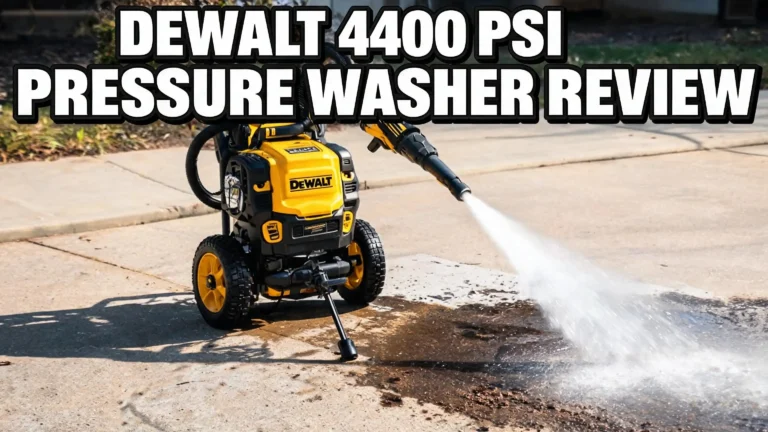
1. DeWalt 2600 PSI Jobsite Pressure Washer

- 3000 PSI 1.1 GPM 15 Amp Cold Water Electric Pressure Washer with Internal Equipment...
Last update on 2026-09-21 / Affiliate links / Images from Amazon Product Advertising API
DeWalt 2600 PSI Jobsite Pressure Washer
The DeWalt 2600 PSI sits at the top of the performance range for driveway cleaning. This machine delivers serious power while staying compact enough for homeowners who want professional results without industrial bulk.
Quick-connect fittings make swapping nozzles fast and simple. The onboard detergent tank lets you tackle stubborn stains and grime without extra setup hassle.
DeWalt built this washer to last through heavy use on job sites and home projects alike. The solid frame and quality components mean it handles repeated cleaning sessions without breaking down.
On real driveways, the 2600 PSI cuts through years of buildup, oil marks, and dirt in fewer passes than lower-power models. You’ll see visible results on both concrete and asphalt surfaces.
Pros
- Delivers strong cleaning power for tough driveway grime and oil stains
- Quick-connect system saves time when switching between nozzle types
- Built-in detergent tank for chemical injection without extra equipment
- Heavy-duty construction stands up to frequent use
Cons
- Heavier than entry-level models, which matters if you move it often
- Corded design limits how far you can roam without an extension cord
2. DeWalt DWPW2100

- Dewalt WASHER PRS WTR 2100PSI 1.2GPM DWPW2100
Last update on 2026-09-21 / Affiliate links / Images from Amazon Product Advertising API
The DeWalt DWPW2100 delivers 2100 PSI of cleaning power that sits right in the sweet spot for driveway work. This machine suits homeowners who want solid performance without stepping up to heavy-duty models.
The washer features quick-connect nozzle tips for fast switching between spray patterns. Its onboard detergent tank lets you inject cleaning chemicals directly into the water stream for stubborn grime and oil marks.
DeWalt engineered this unit with durability in mind, using a sturdy frame and quality components built to handle regular driveway cleaning sessions. The design balances power with manageable weight for most users.
On real driveways, the DWPW2100 removes dirt, algae, and light oil stains effectively in two to three passes. It won’t match the 2600 PSI model’s raw power, but it handles typical residential grime without overkill.
Pros
- Quick-connect system speeds up nozzle changes
- Chemical injection capability tackles tough stains
- Solid mid-range power for standard driveway jobs
- Reliable DeWalt build quality
Cons
- Less powerful than 2600 PSI models for heavy buildup
- Corded design limits movement range
- Heavier than compact lightweight washers
3. Greenworks GPW2500C

- TRUBRUSHLESS MOTOR : Powerful 14 Amp TruBrushless motor generates 3000 PSI and 2.0 GPM for...
- All water pressure (PSI) and flow rate (GPM) claims for this product were tested and...

Last update on 2026-09-21 / Affiliate links / Images from Amazon Product Advertising API
The Greenworks GPW2500C brings pro-grade cleaning power to residential driveway work. This 2500 PSI electric washer sits at the top of the ideal power range for serious grime removal without excessive overkill.
Greenworks engineered this unit with durable construction that handles frequent use on concrete and asphalt surfaces. The machine features quick-connect nozzle tips and an onboard detergent tank for tackling stubborn oil marks and buildup.
On real driveways, the GPW2500C removes years of dirt, algae, and stains in just one or two passes. The chemical injection capability lets you apply detergent directly without extra equipment, saving time and effort.
This washer suits homeowners who want maximum cleaning performance without stepping into commercial-grade territory. If your driveway needs serious restoration work, the 2500 PSI delivers results fast.
Pros – 2500 PSI handles tough oil stains and heavy buildup effectively – Chemical injection tank simplifies detergent application – Quick-connect fittings speed up nozzle changes – Solid build quality for regular residential use
Cons – Higher PSI means less control on delicate surfaces – Heavier than lower-power models, requiring more effort to maneuver
4. Westinghouse ePX3500

- Delivers 2500 max PSI and 1.76 max GPM (at lowest pressure), and 2000 rated PSI and...
- Super compact and lightweight at 16.5” tall and 19 pounds for convenient storage and...
Last update on 2026-09-21 / Affiliate links / Images from Amazon Product Advertising API
The Westinghouse ePX3500 brings 2500 PSI of cleaning power to driveway work without overwhelming complexity. This electric pressure washer suits homeowners who want serious cleaning muscle for concrete, asphalt, and stubborn grime buildup.
The standout feature here is the 1.76 GPM flow rate, which ranks among the highest in residential models. This combination of pressure and volume means faster cleaning cycles and fewer passes over stained or dirty surfaces.
Westinghouse built this unit with durability in mind, using a solid frame and quality pump components rated for regular use. The kink-free hose and quick-connect nozzle system add convenience to setup and operation.
On real driveways, the ePX3500 tackles years of dirt, algae, and light oil stains effectively in one or two passes. The high flow rate makes this washer particularly efficient for covering large driveway areas quickly.
Pros
- 2500 PSI handles tough stains and heavy buildup on concrete
- 1.76 GPM flow rate speeds up cleaning time significantly
- Quick-connect nozzles simplify switching between spray patterns
- Solid construction built for frequent residential use
Cons
- Higher PSI requires careful technique on delicate surfaces
- Heavier weight demands more physical effort during extended use
- No onboard detergent tank (requires separate injection setup)
5. Craftsman CMEPW1700

- Powerful cleaning: Electric power washer with1700 max psi* and 1. 2 gpm**
- Added benefit: soap applicator bottle for cleaning with soap
Last update on 2026-09-21 / Affiliate links / Images from Amazon Product Advertising API
The Craftsman CMEPW1700 is a lightweight electric pressure washer designed for homeowners tackling smaller driveway sections and routine cleaning tasks. This unit sits at the lighter end of the driveway spectrum, making it ideal for those who prioritize ease of handling over maximum cleaning force.
At 1700 PSI and 1.2 GPM, this washer delivers enough power for dirt, light algae, and mild stains on concrete surfaces. Craftsman engineered this model with a compact frame and sturdy construction that resists corrosion and handles regular residential use without breaking down.
On real driveways, the CMEPW1700 removes surface dirt and light buildup effectively in multiple passes. The quick-connect nozzle system lets you switch spray patterns fast, and the onboard detergent tank helps tackle stubborn grime when you add cleaning solution.
This washer works best for maintenance cleaning rather than heavy restoration work. Homeowners with smaller driveways or those new to pressure washing appreciate its manageable weight and straightforward operation.
Pros – Lightweight and easy to maneuver around tight spaces – Quick-connect nozzles speed up pattern changes – Detergent tank included for tough grime removal – Reliable Craftsman build quality at this power level
Cons – 1700 PSI struggles with heavy oil stains and thick buildup – Slower cleaning on large driveways due to lower flow rate – Not ideal for concrete restoration projects
What to Look For Before You Buy
Before you buy an electric pressure washer for your driveway, focus on a few key factors that determine whether you’ll actually use the machine and get real results.
PSI and flow rate matter most. Driveways need 1,800 to 2,500 PSI to handle dirt, algae, and stains effectively. Pair this with a flow rate between 1.1 and 1.76 GPM. This combination removes years of buildup without damaging concrete surfaces.
Think about your driveway size. Smaller driveways work fine with 1,700 PSI models. Larger areas benefit from 2,500 PSI units that clean faster and tackle tougher stains in fewer passes.
Portability versus power is a real trade-off. Heavier units deliver more cleaning muscle but require more effort to move around. Lighter models sacrifice some power but make maneuvering easier, especially in tight spaces near garages or parked cars.
Check if the washer has a detergent injection tank. This feature lets you apply cleaning chemicals without buying separate equipment. Quick-connect nozzles also save time when switching between spray patterns.
Corded electric models stay consistent in power output. They never lose pressure like battery units do. However, you’ll manage a power cord throughout your cleaning job.
Look for anti-tip wheels and sturdy frames. Durable construction means your washer survives regular use and rough handling. Quality pump components ensure the machine performs well season after season.
Finally, consider handle-mounted controls. They let you adjust pressure and spray patterns without bending down. Kink-free hoses prevent frustrating stops during work.
How to Choose the Right One
Choosing the right electric pressure washer for your driveway comes down to matching your cleaning needs with machine capabilities. PSI and flow rate are your two most important specs to evaluate first.
For driveways, aim for machines in the 1,800 to 2,500 PSI range. This power level removes stubborn stains, algae, and dirt buildup without damaging concrete. Flow rate matters too. Look for models delivering 1.1 to 1.76 GPM. Higher flow rates mean you finish cleaning faster and cover more ground in less time.
Driveway size shapes your choice. Small driveways benefit from lighter machines around 1,700 PSI. Larger driveways need the extra power of 2,500 PSI models to complete the job efficiently. Measure your space before shopping to avoid buying too much or too little power.
Portability versus power is a real trade-off. Corded electric models stay consistent in output and weigh less than gas alternatives. Battery powered washers offer freedom from cords but may lose pressure as the battery drains. Think about your driveway layout and how you’ll move the machine around.
Check for practical features that make the job easier. Quick-connect nozzles let you switch spray patterns fast. Detergent injection tanks help tackle tough grime and oil stains. Anti-tip wheels prevent tipping on uneven concrete. Handle-mounted controls keep everything within arm’s reach.
Kink-free hoses reduce frustration during use. A sturdy frame built to last matters more than flashy extras. Start by identifying your driveway’s biggest cleaning challenge, then pick a washer designed to handle it.
Final Verdict
Picking the right electric pressure washer depends on your driveway’s needs. Each model on this list brings something different to the table.
The DeWalt 2600 PSI Electric Jobsite Pressure Washer stands out as our top pick. It handles large driveways with tough stains and offers the muscle homeowners need for serious cleaning jobs.
The DeWalt DWPW2100 works well as a runner-up choice. It balances power and control nicely for mixed surface conditions around your property.
For those wanting pro-grade results, the Greenworks GPW2500C delivers strong performance. Its build quality suits users who clean driveways often and want lasting durability.
The Westinghouse ePX3500 brings solid flow rate benefits to the table. Its 1.76 GPM output makes quick work of grime spread across wider concrete areas.
Smaller driveways call for a different approach. The Craftsman CMEPW1700 fits this need perfectly, giving light users an easy to handle option without excess weight.
The RYOBI 1600 PSI rounds out our list as another lighter option. It suits homeowners who prioritize simple maintenance cleaning over heavy restoration tasks.
Your final decision should match your driveway’s actual condition. Large stained surfaces need higher PSI models like the DeWalt or Greenworks picks.
Smaller spaces with light dirt buildup work fine with the Craftsman or RYOBI options. Think about how often you plan to clean and how much surface area you cover each time.
Every model here delivers real value for driveway maintenance. Match the specs to your space, and you’ll get clean results every time you pull out the hose.
Frequently Asked Questions
How much PSI do I need to clean my driveway?
For most driveways, 1,800 to 2,500 PSI works best. Light dirt and stains come off at 1,800 PSI. Heavy oil buildup needs closer to 2,500 PSI. The DeWalt 2600 PSI model handles stubborn grime easily.
Anything below 1,700 PSI takes longer on larger areas. Anything above 2,500 PSI may damage certain concrete surfaces. Find your sweet spot based on how dirty your driveway actually is.
What’s the difference between PSI and GPM?
PSI measures water pressure. GPM measures water flow per minute. You need both for fast, effective cleaning.
High PSI alone isn’t enough. A machine with 2,500 PSI but only 1 GPM cleans slowly. The Westinghouse ePX3500 pairs 2,500 PSI with 1.76 GPM, which speeds up the job significantly.
The ideal combo for driveways is 1,800 to 2,000 PSI with 1.1 to 1.2 GPM. This balance cleans efficiently without wasting water.
Do I need a detergent tank for my driveway?
Yes, a detergent injection tank makes a real difference for oil stains and stubborn grime. Most top models include this feature.
Detergent loosens buildup so pressure alone doesn’t have to do all the work. This saves time and reduces strain on your concrete. The DeWalt and Greenworks options both offer onboard detergent tanks.
Are corded or battery models better for driveways?
Corded electric models stay at full power the entire time. Battery models lose power as the charge drops. For driveway work, corded is more reliable since you’ll need consistent pressure for larger areas.
Corded washers also weigh less overall. The trade-off is managing the cord around your driveway.